
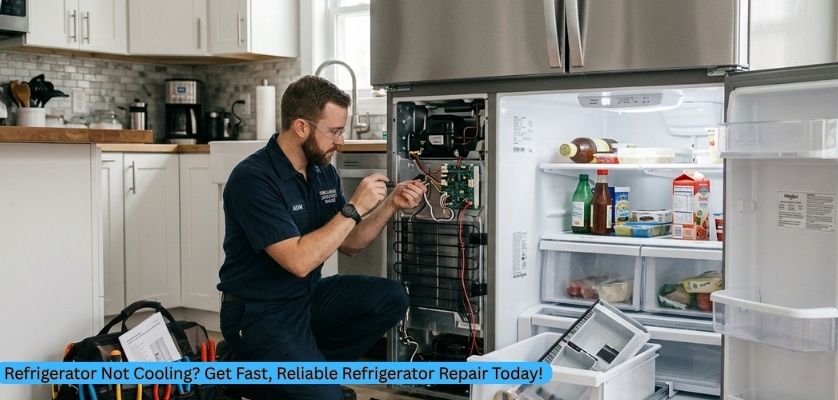
Before booking refrigerator repair check these causes.
1. The Temperature Setting Is Warm
Start with the easiest fix. Set refrigerator between 35°F and 38°F. Set freezer to 0°F. Check whether vacation mode, demo mode or showroom mode is active.
Use an appliance thermometer to confirm the temperature. After changing the setting allow, about 24 hours for refrigerator temperature to stabilize.
2. Blocked Vents or an Overloaded Refrigerator
Cold air needs space to move around. If you push food close to the inside vents you might block the airflow. This can make some spots inside your refrigerator feel warm.
Try to move your food containers from the back wall, the ceiling and the vents. You should also check the return vents in the freezer. Make sure to leave some space between your food items so the cold air can move around your refrigerator easily.
3. Dirty Condenser Coils
When the condenser coils get dirty your refrigerator has to work harder to get rid of heat. First unplug the refrigerator. Then find the coils under the refrigerator or behind the grille.
Use a brush or a vacuum to get rid of the dust and dirt. If you have pets at home you might want to clean the condenser coils often. ENERGY STAR says that keeping your refrigerator clean helps the refrigerator run better and save energy.
4. A Damaged Door Gasket
5. Frost Is Blocking the Evaporator
6. The Evaporator Fan Is Not Working
7. Compressor, Relay or Refrigerant Problems
When Should You Call for Refrigerator Repair?
A Simple Symptom Guide
- Freezer cold, refrigerator warm: This may point to a blocked vent, frost buildup, or a fan problem.
- Both sections warm: This could be caused by dirty coils, a bad relay, compressor trouble, or a sealed-system issue.
- Heavy frost: This often points to a defrost problem.
- Clicking sounds: These may signal a faulty relay or compressor.
- Water underneath: A blocked drain could be the cause.
Keep Your Refrigerator Working Properly
Frequently Asked Questions About Refrigerator Cooling Problems
Why is my refrigerator not cooling but the freezer is working?
This often happens because cold air cannot move from the freezer to the refrigerator. Blocked vents, heavy frost, or a failed evaporator fan are common causes. If basic airflow checks do not help, you may need professional refrigerator repair.
How long does it take for a refrigerator to cool after adjusting the temperature?
A refrigerator can take several hours to reach the correct temperature. After changing the setting, allow about 24 hours for the temperature to stabilize before deciding there is a serious cooling problem.
What temperature should a refrigerator be?
The refrigerator should generally stay at 40°F or lower. For better food safety, many manufacturers recommend setting the refrigerator around 35°F to 38°F and the freezer at 0°F.