Category

Appliance Maintenance

Washing Machine

Washing Machine Not Draining? Causes, Fixes & Repair Tips

By Appliance Maintenance, Repairing, Washing machine, Washing Machine Repair, wasing machine service
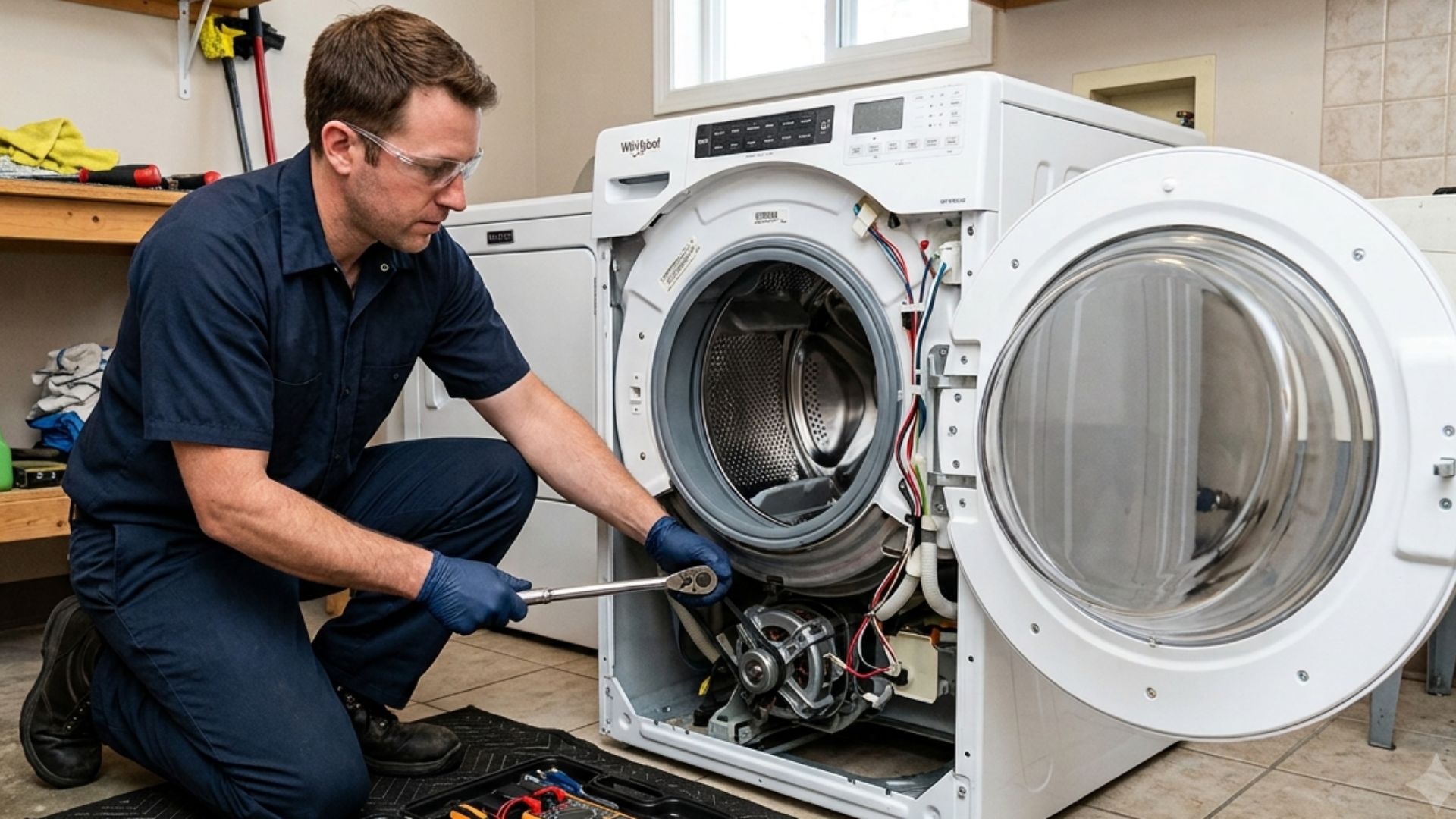
A washing machine that does not drain can quickly make day a frustrating experience. You might notice water left inside the drum after the cycle is done. In some cases the machine might stop before the spin cycle even starts.
The good news is that a clogged hose, a blocked filter or a small object can often be the reason. However some drainage problems might need help from a professional who repairs washing machines.

Why Is My Washing Machine Not Draining?

Several parts help remove water from your washing machine. However, a blockage can stop these parts from working properly. As a result, the washing machine may leave water inside the drum.
So, what causes this problem? Here are some common reasons.

1. Clogged Drain Hose

The drain hose carries wastewater from the washing machine to your home’s drain. However, a bent, blocked, or dirty hose can slow down or stop the water flow.
First, check the drain hose carefully. Look for sharp bends, kinks, or anything that may block the hose. If you find a blockage, remove it carefully when it is safe to do so.
Also, make sure you place the hose correctly. Keep it free from pressure behind the machine. This way, water can flow out smoothly during the drain cycle.

2. Blocked Drain Filter

Most washing machines have a drain filter that catches things like lint, coins, hair and other small items. Over time this filter can get filled up. Stop working.
A blocked filter can slow down. Stop the drainage completely. Check the owners manual before trying to clean the filter because the location and method for cleaning can be different for each model.

3. Faulty Drain Pump

The drain pump is the part that pushes the water out of the washing machine. If the pump is broken or stops working the water can stay inside the drum.
You might hear sounds like humming or buzzing when the machine tries to drain. If cleaning the filter and checking the hose does not fix the problem the drain pump might need to be checked or replaced.

4. Foreign Objects in the Pump

items like coins, buttons, socks or pieces of clothes can sometimes end up in the drainage system.
These items can get stuck in the pump. Stop the water from draining. Do not try to push anything into the pump while trying to remove a blockage. If you can’t reach it safely call a trained repair technician.
5. Blocked Household Drain
Sometimes the washing machine is working fine. The home drain is the problem. If water flows back, near the drain hose the plumbing system might need to be looked at.
What Can You Do When Your Washing Machine Won’t Drain?

Before you call a washing machine repair service, try a few simple checks.

First, switch off the washing machine and unplug it from the power supply. Next, check the drain hose for kinks, bends, or visible blockages. If your washing machine has an accessible drain filter, clean it carefully. However, always follow the manufacturer’s instructions before removing or cleaning the filter.
You should also check the display for an error code. If you see one, check the owner’s manual. The manual can help you understand what the code means and what steps you should take.
In addition, avoid running the washing machine while water remains inside the drum. Running another cycle can put extra pressure on the drain system. As a result, it may make the problem worse.

When Should You Call for Washing Machine Repair?

If your washing machine still will not drain after these basic checks, you may need professional help.
  • Contact a qualified technician if you notice:
  • The drain pump makes loud, unusual, or strange noises.
  • Water remains inside the drum after every cycle.
  • The washing machine displays a drainage error.
  • Water leaks while the machine drains.
  • The washing machine stops before the spin cycle.
  • The drain pump or electrical parts look damaged.
A trained technician can inspect the drain hose, drain filter, pump, wiring, and other parts of the washing machine. After checking these components, the technician can identify the cause and recommend the right repair.

How to Prevent Drainage Problems

Regular maintenance can help stop washing machine drainage problems. First clean the drain filter often as the manufacturer says. Also check your clothing pockets before you start a wash. Coins, buttons, tissues and other small things can go into the drain system. Cause clogs.
Also don’t wash things that can break apart easily. These things can let out lint and trash into the washing machine.. Always use the right amount of detergent. Using much detergent can make buildup and hurt how the machine works.
Lastly look at the drain hose often. Make sure it stays straight and has no bends or damage. By doing these things you can help your washing machine drain well and cut down on surprise repairs.
Lastly check the drain hose now and then. Make sure it is not bent, twisted, broken or hurt. A clean and correctly placed drain hose lets water go out smoothly.

Get Professional Washing Machine Repair

A washing machine that does not drain should not be ignored. Although a simple blockage may be easy to fix, repeated drainage problems can point to a damaged part.
Therefore, if your washing machine continues to hold water, contact a professional washing machine repair service. A qualified technician can check the machine and find the cause of the problem. After that, they can recommend the right repair and help your washing machine return to normal operation.

Frequently Asked Questions

Why is my washing machine not draining?

A washing machine may not drain because of a clogged drain hose, blocked filter, faulty drain pump, or blocked household drain. First, check the hose and filter. If the problem continues, contact a professional washing machine repair service.

How do I fix a washing machine that will not drain?

First, switch off and unplug the machine. Next, check the drain hose for kinks or blockages. Also, clean the drain filter if your model allows it. However, call a technician if the machine still holds water.

Can a clogged drain hose stop a washing machine from draining?

Yes. A clogged or kinked drain hose can restrict water flow. As a result, the washing machine may leave water inside the drum or stop before the spin cycle.

refrigerator repair

Refrigerator Not Cooling? 7 Causes and Quick Fixes That Work

By Appliance Maintenance, Home Appliance Tips, Refrigerator problems, refrigerator repair, Repairing
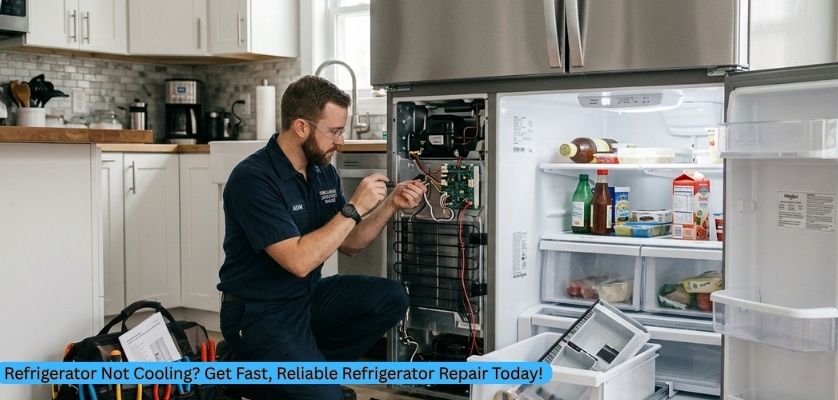
I have seen a refrigerator that stops cooling and refrigerator can spoil food quickly. You may notice food, soft ice cream spoiled milk or water that never gets cold. Sometimes the freezer still works while refrigerator stays warm.
The USDA recommends keeping refrigerator at 40°F or lower and keeping freezer at 0°F. If perishable food has been above 40°F for than two hours it is safer to throw it away. Use the one-hour limit when temperatures reach 90°F or higher. Never taste food to decide if it is safe.

Before booking refrigerator repair check these causes.

1. The Temperature Setting Is Warm

Start with the easiest fix. Set refrigerator between 35°F and 38°F. Set freezer to 0°F. Check whether vacation mode, demo mode or showroom mode is active.

Use an appliance thermometer to confirm the temperature. After changing the setting allow, about 24 hours for refrigerator temperature to stabilize.

2. Blocked Vents or an Overloaded Refrigerator

Cold air needs space to move around. If you push food close to the inside vents you might block the airflow. This can make some spots inside your refrigerator feel warm.

Try to move your food containers from the back wall, the ceiling and the vents. You should also check the return vents in the freezer. Make sure to leave some space between your food items so the cold air can move around your refrigerator easily.

3. Dirty Condenser Coils

When the condenser coils get dirty your refrigerator has to work harder to get rid of heat. First unplug the refrigerator. Then find the coils under the refrigerator or behind the grille.

Use a brush or a vacuum to get rid of the dust and dirt. If you have pets at home you might want to clean the condenser coils often. ENERGY STAR says that keeping your refrigerator clean helps the refrigerator run better and save energy.

4. A Damaged Door Gasket

If the door seal is old or damaged, cold air can leak out. As a result, your refrigerator may have to work harder to stay cool.
To check the seal, try the paper test. First, place a sheet of paper between the door and the frame. Then, close the refrigerator door. If the paper slips out easily, the door gasket may not be sealing properly.
Next, clean the gasket with warm water and a little mild soap. Also, check for cracks, gaps, or hard spots.
Finally, if the gasket is damaged, replace it. A new door seal may fix the cooling problem and, in some cases, help you avoid a costly refrigerator repair.

5. Frost Is Blocking the Evaporator

frost on the freezers back wall can block airflow into the refrigerator section. I have seen this happen when a defrost heater, sensor, timer or control board has failed.
If it is safe according to your manufacturers instructions unplug the refrigerator. Let the ice melt naturally. I would never use a knife to remove ice or a blow dryer.
If frost returns within a days schedule professional service.

6. The Evaporator Fan Is Not Working

The evaporator fan moves air, from the freezer into the refrigerator. I have noticed that if it fails the freezer stays cold while the refrigerator becomes warm.
Listen for the fan when the freezer door is closed. If you hear airflow or unusual noises that can indicate a problem.
If the motor stays silent I recommend refrigerator repair.

7. Compressor, Relay or Refrigerant Problems

Repeated clicking every minutes may show a faulty start relay or compressor problem. I have heard that a compressor that runs constantly but cannot cool the refrigerator may also show a sealed‑system issue.
Refrigerant does not normally disappear on its own. So, if the refrigerant level is low, there may be a leak in the system. In that case, the leak needs to be found and repaired.
For your safety, never handle refrigerant lines, capacitors, or exposed electrical parts yourself. Instead, let a trained professional inspect the appliance and carry out the necessary refrigerator repair.
When Should You Call for Refrigerator Repair?

When Should You Call for Refrigerator Repair?

However, some refrigerator problems need professional help. Call a trained technician if you notice burning smells, sparks, melted wiring, repeated breaker trips, or a very hot compressor. Also, if the refrigerator does not cool after simple checks, it may be time for professional refrigerator repair.

A Simple Symptom Guide

  • Freezer cold, refrigerator warm: This may point to a blocked vent, frost buildup, or a fan problem.
  • Both sections warm: This could be caused by dirty coils, a bad relay, compressor trouble, or a sealed-system issue.
  • Heavy frost: This often points to a defrost problem.
  • Clicking sounds: These may signal a faulty relay or compressor.
  • Water underneath: A blocked drain could be the cause.

Keep Your Refrigerator Working Properly

Fortunately, regular care can help prevent many cooling problems. First, clean the condenser coils about twice a year. Also, keep the air vents clear and check the door seals regularly.
In addition, use an appliance thermometer to monitor the temperature. After making a repair or adjustment, check the refrigerator again within 4–24 hours.
Finally, if the problem returns or the refrigerator still cannot stay cold, contact a professional for refrigerator repair.
Start with checks. If the problem involves components, fans, compressors or refrigerant professional refrigerator repair can help diagnose the issue safely and prevent further damage.

Frequently Asked Questions About Refrigerator Cooling Problems

Why is my refrigerator not cooling but the freezer is working?

This often happens because cold air cannot move from the freezer to the refrigerator. Blocked vents, heavy frost, or a failed evaporator fan are common causes. If basic airflow checks do not help, you may need professional refrigerator repair.

How long does it take for a refrigerator to cool after adjusting the temperature?

A refrigerator can take several hours to reach the correct temperature. After changing the setting, allow about 24 hours for the temperature to stabilize before deciding there is a serious cooling problem.

What temperature should a refrigerator be?

The refrigerator should generally stay at 40°F or lower. For better food safety, many manufacturers recommend setting the refrigerator around 35°F to 38°F and the freezer at 0°F.

Appliance Repair

The Complete Home Appliance Repair & Maintenance Guide (2026)

By Appliance Maintenance, Dishwasher, Dishwasher problems, dryer repair sign, dryer repair tips, Refrigerator problems, Repairing, Washing machine, Washing Machine Repair
It is evident that appliances make life so easy since they enable us to store food, do laundry and washing dishes. Nevertheless, despite being durable and efficient, there comes a time when we need to fix them and maintain them. Knowledge on how to fix and maintain an appliance and when it should be repaired or replaced may save you hundreds of dollars a year.
Home Appliance Repair and Maintenance Manual (2026) will provide you with information on the maintenance process and all problems related to household appliances including whether to repair or change the appliance and other things.
Why is Maintenance of Appliances Necessary?
Homeowners tend to call professionals only when their appliance malfunctions completely.
Regular home appliance maintenance gives you such benefits as:
  • Increased appliance durability
  • Fewer costs on repairs
  • Better energy efficiency
  • No surprise breakdowns
  • Safety of your home

Maintaining the appliance performance according to manufacturer specifications

Maintenance is always cheaper than appliance repair.

Life Span of Key Household Appliances

Knowing the life span of your appliances will make it easier for you to choose whether to repair an appliance. In addition, proper maintenance can often add several years to these estimates.
Refrigerator 10–15 Years
Dishwasher 8–12 Years
Washing Machine 10–15 Years
Dryer 10–13 Years
Oven & Range 13–18 Years
Microwave 7–10 Years
Garbage Disposal 8–15 Years
Freezer 12–16 Years
Overall, proper maintenance can often add several years to these estimates.

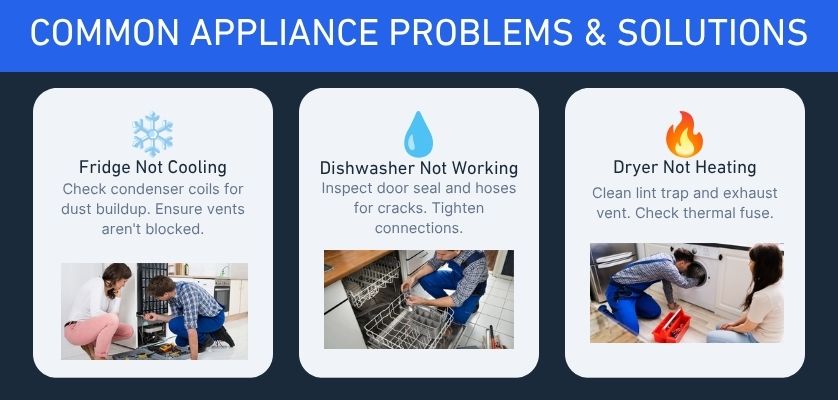
Common Appliance Problems and Solutions

Not Cooled Refrigerator

A frequently seen problem with refrigerator repairing is the case of a warm refrigerator and cold freezer.

Causes

  • First, accumulation of dirt in the condenser coils.
  • Additionally, obstruction in the air vents.
  • In some cases, problematic evaporator fan.
  • Moreover, defrost system malfunctions.
  • Finally, broken compressor.

Maintenance

  • First, clean condenser coils every six months.
  • Next, clear air vents.
  • Also, test door seals.
  • Finally, maintain the temperature of 37–40 °F.
As a result, regular maintenance helps prevent costly refrigerator repairs.

Washing Machine Problems

Washing machines have high utilization and wear out. Therefore, routine maintenance is essential.

Common Trouble Spots

  • Won’t spin
  • Won’t drain
  • Water leaking
  • Too much vibration
  • Foul odors

Maintenance Tips

  • First, do not overload.
  • Next, perform monthly cleaning of the drain filter.
  • Also, keep the door open after each cycle.
  • Finally, use correct detergent.
Consequently, regular washing machine maintenance avoids costly repairs.

Dryer Doesn’t Heat

One of the most frequently searched appliance repair troubles is a dryer that runs but does not heat. However, this issue is often caused by a few common problems that can be identified early.

Reasons

  • First, failure of the heating element.
  • Additionally, fused thermal switch.
  • Moreover, obstruction of the dryer vent.
  • Finally, thermostat defect.

Maintenance Tips

  • After each load, clean the lint trap.
  • In addition, clean the dryer vents once per year.
  • Finally, avoid overfilling the drum.
As a result, cleaned dryer vents help improve performance and prevent fire hazards.

Dishwasher Troubles

Dishwashers become prone to drainage and cleaning troubles.

Symptoms

  • Water standing
  • Unwashed dishes
  • Foul smell
  • Water leaking

Prevention

  • Weekly filter cleaning.
  • Once per month use dishwasher cleaning.
  • Clean scraped dishes before loading.
  • Periodically check the spray arms.

Oven/Stove Trouble Spots

Kitchen appliances need regular maintenance as well.

Trouble Spots

  • Doesn’t heat
  • Baking unevenly
  • Burners won’t light
  • Temperature readings incorrect

Maintenance Tips

  • Clean up spills right away.
  • Replace faulty burner igniters.
  • Temperature calibration once a year.

Indicators That Your Appliance Is Needing Repair

Many appliances give off signals before they break down altogether.
Look out for:
  • Screaming noises
  • Odors of burning
  • Leaking water
  • High electricity bills
  • Cycling too often
  • Working slowly
  • Indicating error codes
  • Spoiled food
  • Clothes not drying
  • Ineffective cleaning cycles
Ignoring these signs can lead to bigger repair bills.

Appliance DIY Troubleshooting Guide

Before you call an appliance repair service, try these simple troubleshooting steps.

Check the Power Source

  • First, inspect the electrical outlet.
  • Next, examine the circuit breaker.
  • Also, inspect the power cord.

Check the Airflow

  • Finally, clean the air vents.
  • In addition, remove any obstructions.
  • If necessary, inspect and clean the filters.
Or, if you prefer a bullet-list style:

Check the Power Source

  • Inspect the electrical outlet.
  • Examine the circuit breaker.
  • Look for damage to the power cord.

Check the Airflow

  • Clean the air vents.
  • Remove any obstructions.
  • Inspect and clean the filters.

Choose Repair When:

  • Your appliance is less than 8 years old.
  • The repair costs less than half the price of a new one.
  • Replacement parts are easy to find.
  • Your appliance still works well.
  • Only a small part needs to be fixed.

Choose Replacement When:

  • Your appliance is older than its expected life.
  • The compressor or motor has failed.
  • It needs repairs many times each year.
  • Your energy bills keep getting higher.
  • The repair costs more than buying a new appliance.
A trusted appliance repair expert can help you choose the best option.
An experienced appliance repair service will guide you in making your choice.

Annual Appliance Maintenance Checklist

Using a seasonal maintenance schedule helps keep your appliances in excellent condition throughout the year.

Spring

  • First, clean your refrigerator’s coils.
  • Next, inspect your washing machine’s hoses.
  • Also, inspect the vent of your dryer.
  • Finally, clean your dishwasher filter.

Summer

  • During summer, inspect the refrigeration function of your fridge.
  • In addition, clean the freezer coils.
  • Then, inspect the ventilation function.

Fall

  • As the weather changes, clean your oven.
  • Next, inspect your smoke detectors near appliances.
  • Also, inspect your electrical cords.

Winter

  • Before winter, inspect your door seals.
  • Additionally, avoid freezing of your water lines.
  • Finally, do preventative maintenance of your appliances.
Overall, using an annual checklist will help prevent emergencies.

How to Extend Appliance Lifespan

Simple things matter greatly. For example:

Refrigerator

  • Avoid packing up shelves.
  • Also, service coils biannually.
  • If needed, replace faulty door seals.

Washing Machine

  • Load clothes evenly.
  • In addition, use HE soap.
  • Furthermore, clean the tub each month.

Dryer

  • Clean the lint filter after each cycle.
  • Additionally, check ventilation every year.

Dishwasher

  • Clean spray arms.
  • Also, use rinse additive.
  • Finally, remove food bits.

Oven

  • Avoid harsh chemicals.
  • Instead, clean spills instantly.
  • If necessary, replace broken seals.

Advantages of Professional Appliance Repairs

While DIY maintenance is helpful, professionals have many benefits.
Professional appliance repairs offer:
  • Correct diagnosis
  • Authentic replacement parts
  • Protection under warranty
  • Safe electrical repairs
  • Increased appliance lifespan
  • Better efficiency
Furthermore, hiring an expert appliance repair company will save you from the extra harm done by incorrect appliance repairs.

How to Select a Proper Appliance Repair Company

Not all repair companies have the same expertise level. Therefore, choosing the right service provider is important.

What should you look for?

  • First, licensed specialists
  • Next, same day service
  • In addition, good reviews of customers
  • Also, warranty for repairs
  • Furthermore, experience with popular brands
  • Moreover, reasonable prices
  • Finally, emergency repairs
As a result, selecting a good local appliance repair company will ensure your safety.

Appliance Maintenance Mistakes Most People Neglect

The majority of malfunctions occur simply because basic maintenance procedures are neglected. Therefore, remember to:
  • First, vacuum the refrigerator coils twice per year.
  • Next, change any broken water supply lines.
  • Also, wash the washing machine filters on a monthly basis.
  • In addition, take out the lint buildup around the dryer.
  • Furthermore, check the appliance cords for damages.
  • Moreover, keep the appliances at the correct level.
  • If necessary, change any damaged door seals.
  • Finally, schedule an annual maintenance visit by a professional.
In the long run, all these steps will help you minimize your appliance repair costs.
The majority of malfunctions occur simply because basic maintenance procedures are neglected.

Remember to:

  • Clean the refrigerator coils twice a year.
  • Replace broken water lines.
  • Clean the washing machine filter every month.
  • Remove lint from the dryer.
  • Check power cords for damage.
  • Keep appliances level.
  • Replace worn door seals.
  • Get a professional inspection once a year.
These steps are easy to follow. As a result, they help prevent breakdowns. You can also lower repair costs. In addition, your appliances will last longer.

Conclusion

Appliances are expensive purchases, and therefore proper appliance care is crucial. Regular maintenance and repair services will help to increase the lifespan of your refrigerator, washer, dryer, dishwasher, oven and many other appliances.
Although some faults can be rectified through maintenance hacks, it is imperative that all recurring faults are fixed by an appliance repair specialist to guarantee efficiency of your appliance in the years to come, such as in 2026.

Frequently Asked Questions

How often should I service my home appliances?

Most major appliances should be inspected and cleaned at least once a year. High-use appliances like dryers and refrigerators benefit from more frequent maintenance.

What is the most common appliance to break down?

Refrigerators, washing machines, dryers, and dishwashers are among the most frequently repaired household appliances due to regular daily use.

Is appliance repair cheaper than replacement?

In many cases, yes. If the repair costs less than 50% of a new appliance and the unit is relatively new, repairing it is usually the better option.

What appliances require regular maintenance?

Refrigerators, washers, dryers, dishwashers, ovens, freezers, and garbage disposals all require routine cleaning and inspection to maintain peak performance.
the-biggest-dishwasher-mistakes-homeowners-make

The Biggest Dishwasher Mistakes Homeowners Make

By Appliance Maintenance, Dishwasher, Dishwasher problems, Repairing

A dishwasher is really helpful, in any home. Many people do not know that they make mistakes with it. These mistakes make it use energy and might need costly fixes. Knowing about these errors helps make your appliance last longer and work well. It also helps you save money and avoid problems. The dishwasher is an appliance that you often use and should maintain to ensure it operates smoothly. 

1. Overloading the Dishwasher

When many dishes are loaded into the dishwasher simultaneously, this is one of the most frequent mistakes consumers make. Many people’s reasoning behind this mistake is that it saves time when washing the dishes. The truth is, when you cram too many dishes into a single load it does not work well. The water and detergent cannot get to every dish. Dishes do not come out clean when this happens. When the dishes are stacked in either of those two ways, your dishwasher will work harder than necessary and you will have an appliance that has worked overtime and will be full of dirty dishes. 

2. Skipping Regular Dishwasher Cleaning

People think that dishwashers are self cleaning.. The truth is that food bits and grease can get stuck inside. This stuff can also leave behind a residue from the soap. If you do not clean it all this stuff will build up. Clean the filter and spray arms of your dishwasher. Clean the door seals.By maintaining a clean, you’ll be not only maintaining your efficiency, but also improving the performance of your appliance and maintaining your home as well. One thing you should clean frequently is the filter, spray arms and door seal. These areas are where all the debris collects and can prevent from working properly.

3. Using Too Much Detergent in Dishwasher

More detergent does not mean dishes. Using much detergent can leave residue on your dishes. It can also cause buildup inside your machine. For results always follow what the manufacturer recommends.

4. Ignoring Small Problems

If you hear noises or notice that your machine is not cleaning properly do not ignore it. You should also pay attention to leaks or problems, with the water draining. These small issues can become problems if you do not fix them. It is an idea to call someone to fix your appliance as soon as you notice something is wrong. This can help you save money on.

5. Not Scraping Off Food

While modern dishwashers are really powerful big chunks of food can clog the filters and drains. To help them work better scrape off the food from plates before putting them in. This also helps make the appliance longer.

Protect Dishwasher & Your Investment

Using your dishwasher the way and taking care of it can make it last a lot longer. If it is not working like it is supposed to you should get a professional to fix it. They can find out what is wrong  and fix it before it becomes an expensive problem, with it.

How Regular Maintenance Reduces Refrigerator Repair Costs

How Regular Maintenance Reduces Refrigerator Repair Costs

By Appliance Maintenance, Refrigerator problems, Repairing
A refrigerator is always, on, day and night to keep our food fresh and safe. The refrigerator works all the time so we should check it regularly to keep the refrigerator in shape. Doing things to take care of the refrigerator makes the refrigerator work better uses less energy and saves us money on refrigerator repairs.

Why Maintenance Matters for Refrigerator Repair Costs

Dust and dirt can really hurt how well your refrigerator works over time. When parts get dirty or blocked your refrigerator has to work a lot to keep things cool. This can be bad for parts, like the compressor or the fan motor.
If you take care of your refrigerator it will keep running and you will not have to deal with it breaking down all of a sudden. Regular maintenance is good. It helps your refrigerator longer and it also saves you money on refrigerator repairs.

Cleaning Condenser Coils Reduces Refrigerator Repair Costs

Refrigerator condenser coils are really important. They help get rid of heat and keep your refrigerator running every single day. When dust builds up on these coils it makes your refrigerator not cool well and it uses a lot more energy.
If the coils are dirty the refrigerator has to work a lot and it gets too hot a lot more often.
You should clean the coils on your refrigerator every months so that the air can flow better.
Cleaning the coils on a basis will help you avoid having to pay for expensive repairs. It will make your refrigerator work a lot better.

Checking Door Seals Prevents Higher Refrigerator Repair Costs

The door seals on your refrigerator keep the air inside every single day. If the seals are cracked or loose warm air gets in easily. This makes the refrigerator work a lot harder to keep things cool. You should check the door seals, on your refrigerator all the time to see if they are damaged or worn out. If you find any problems you should replace the seals away. This will help your refrigerator work better. You will not have to pay for expensive repairs to the cooling system.

Fixing Small Problems Early Saves Money

Small problems with your refrigerator can turn into issues if you do not pay attention to them. If you hear noises or find water leaks or if your refrigerator is not cooling evenly it probably means something is going wrong inside the refrigerator.
Refrigerator technicians can find these problems. Fix them before they become serious. Fixing these problems on usually costs a lot less, than buying new major parts for your refrigerator.

Final Thoughts

Regular maintenance is really important, for homeowners because it helps them save money on refrigerator repairs and makes their appliance work better. If you clean the condenser coils and check the door seals you can find problems before they become big issues. Fixing these problems early is an idea because it prevents expensive breakdowns and keeps your refrigerator running well for a long time. Regular maintenance helps homeowners reduce refrigerator repair costs and it also improves refrigerator performance.
Emergency Appliance Repair

Emergency Appliance Repair: Common Problems & Same-Day Solutions Every Homeowner Should Know

By Appliance Maintenance, Repairing

What Is Emergency Appliance Repair?

Emergency appliance repair is about fixing problems with appliances really fast usually on the same day they happen. This is for things that need to be fixed away. For instance if your refrigerator is not working your food can go bad in a few hours.. If your dryer is broken you will have a lot of wet clothes to deal with. Emergency appliance repair is important because it helps people deal with these kinds of problems quickly which makes a difference, in daily life. Emergency appliance repair is very helpful when you need something fixed fast.

Common Problems That Need Immediate Attention

Some appliance problems need to be fixed because they can cause bigger problems. For example a refrigerator that is not cooling can ruin the food you have in it. A washer that will not drain can cause a lot of water to spill out. That can damage things.
A dryer that does not get hot can make it hard to do your laundry on time. A dishwasher that is leaking can hurt your kitchen.
When you see these appliance problems you should try to fix them away.

Signs You Should Call for Same-Day Repair

Most appliances give us warning signs before they break down completely. You might hear noises or smell something burning. Sometimes you will notice water leaking from the appliance. The appliance may just not work as well as it used to. If you see any of these signs doing something, about it away can help you avoid spending a lot of money on repairs later.

Simple Checks Before Calling a Technician

Before you call for help you should check a basic things. The appliance needs to be plugged in. You have to inspect the circuit breaker. You also have to clean any filters or vents on the appliance. These small steps can solve the problem with the appliance.. If the issue, with the appliance continues it is best to call a professional to fix the appliance.

Final Thoughts

Appliance breakdowns never happen when it is a time. If you act fast it can make things a lot easier for you. If you have an emergency appliance repair service you can fix appliance problems quickly and keep your home running smoothly. This way your appliance will be. You will not have to worry about appliance breakdowns causing problems, in your home.

FAQs

Q1: What counts as an appliance emergency?

Any issue that creates safety risks, stops daily use, or causes leaks and damage is considered an emergency.

Q2: Can appliances always be repaired the same day?

In most cases, technicians can fix the problem quickly, although some repairs may require additional parts.

Q3: Is emergency repair more expensive?

It can cost slightly more, but it often prevents larger and more costly issues.

Q4: Should I repair or replace my appliance?

If the repair cost is reasonable and the appliance is not too old, repairing it is usually the better option.
stove_repair_service

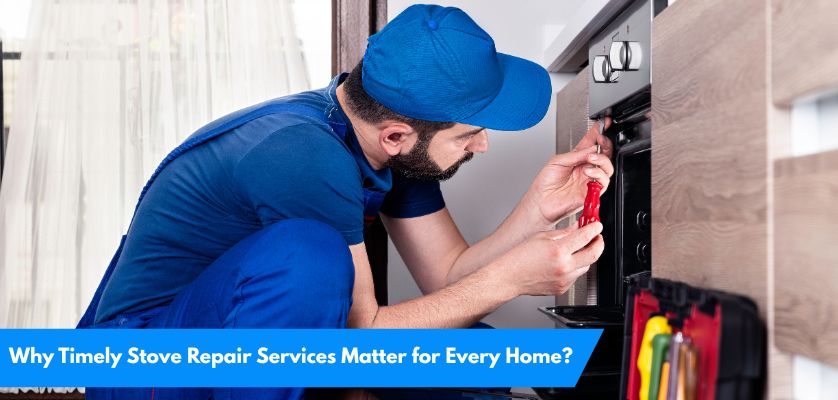
Why Timely Stove Repair Services Matter for Every Home

By Appliance Maintenance, Stove Repair Service

Are you struggling with a stove that is not working properly?  This situation is not only frustrating but also disrupts your daily routine when you cannot prepare meals on time. Therefore, when your stove stops working, you need reliable stove repair services as soon as possible. This is the way to make sure your stove is safe to use and works well. Common stove issues include clogged gas ports, faulty igniters, worn heating elements, or control panel problems. Whether burners won’t ignite, heat unevenly, or the oven fails to reach the set temperature, timely stove repair can save you stress, prevent safety hazards, and restore your kitchen’s efficiency.

Why Stove Repair Is Important for Every Home

Your stove is really important for life. When it breaks down, easy tasks become very hard to manage. Stove repair services are there to fix the problems before they get out of hand. For instance, a little problem with the stove ignition can become an issue later on if you do not take care of it at the initial stage. Some stove problems may pose serious safety concerns if not diagnosed and fixed correctly. That’s why getting your stove repaired on time by experienced technicians saves you a lot of time and money.

Common Stove Problems That Need Proper Stove Repair Services

Over time, stoves can develop several issues.

  • The stove will not turn on.
  • The stove burner will not heat up.
  • The stove is making a noise.
  • The stove buttons or knobs are not working properly.
  • The stove cannot maintain a consistent temperature while cooking

Because these problems affect performance and safety, professional stove repair is always the smarter choice.

Benefits of Timely Stove Repair

Repairing your stove promptly can help you:

  • Avoid costly breakdowns later by fixing small issues early.
  • Improve safety by addressing gas leaks or electrical faults.
  • Extend your stove’s lifespan with regular care and maintenance.

When to Call a Professional

Stove repair isn’t just about convenience; it’s about safety. If you notice gas smells, electrical sparks, or stubborn performance issues that you cannot fix on your own, contacting an experienced technician is your best move. They’ll ensure reliable repairs and help keep your kitchen safe and fully functional.

Ice maker repair

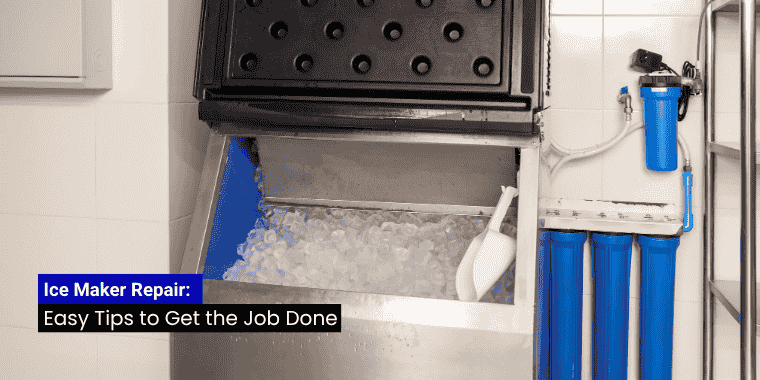
Ice Maker Repair: Easy Tips to Get the Job Done

By Appliance Maintenance

Having ice on hand makes summer drinks more fun and refreshing, whether it’s a chilled lemonade on a hot day or a glass of iced tea after work. But when your ice maker stops working, it can quickly turn into a hassle. Suddenly, everyday comforts like cold beverages or party plans feel incomplete. The good news is that ice maker repair doesn’t always require expert help right away. In many cases, simple checks and quick fixes can get things back on track. With the right steps, you can save both time and money while keeping your kitchen running smoothly.

Why Ice Maker Repair Matters?

When an ice maker breaks down, it can affect your daily routine. Instead of enjoying cold drinks, you may end up with a warm glass. Taking care of the problem quickly helps keep your kitchen running smoothly and prevents waste.
Sometimes, the machine may only need a quick reset. In other cases, the water line or filter may be blocked. By learning simple tricks, you can often solve the problem yourself before calling in experts.

Common Problems That Stop Ice Makers from Working

There are many reasons why your ice maker may not work. In most cases, the fixes are simple and do not take much time.

  • Water supply is turned off or blocked
  • Ice cubes are stuck in the mold
  • The filter is dirty and needs changing
  • Freezer temperature is not set low enough

With these checks, you may spot the issue quickly, and basic ice maker repair can often get everything running again.

Simple Ways to Handle Ice Maker Repair Issues

One of the best things about ice makers is that many problems are easy to handle. First, always check if the water line is clear because even a small block in the pipe can stop ice from forming. Next, make sure the freezer is cold enough, since higher settings may slow down the process. If the ice is stuck in the mold, gently remove it without forcing the parts, as this can save the machine from damage.
In cases where the filter is old, replacing it will often bring the unit back to normal. Sometimes the issue is not just with the ice maker but with the fridge overall. If you notice your food isn’t cooling as it should, scheduling a refrigerator repair might solve the bigger problem and restore proper ice making too.

Smart Care to Prevent Ice Maker Repair

Prevention is always better than fixing problems later. Regular cleaning and checking of your ice maker keeps it in good shape. Wiping down the tray and replacing filters on time helps the machine work smoothly and can also stop bigger issues from happening in the future.
Another good tip is to watch for leaks or strange noises, as these signs often show the need for ice maker repair before it stops working fully. In hot months, extra heat can add pressure, but simple appliance care—like cleaning fridge coils and sealing the freezer door—helps reduce strain and extend its life.

Keep the Cool Going!

Ice makers are small tools, but they add a big touch of comfort to your day. With the right steps, you can keep them running well without stress. From cleaning filters to checking water lines, small actions make a big difference.
By knowing when to try fixes yourself and when to ask for help, you’ll save time, enjoy cool drinks, and extend the life of your machine. Simple ice maker repair done at the right time means taking care of your ice maker today for more fun tomorrow!

washing machine filter

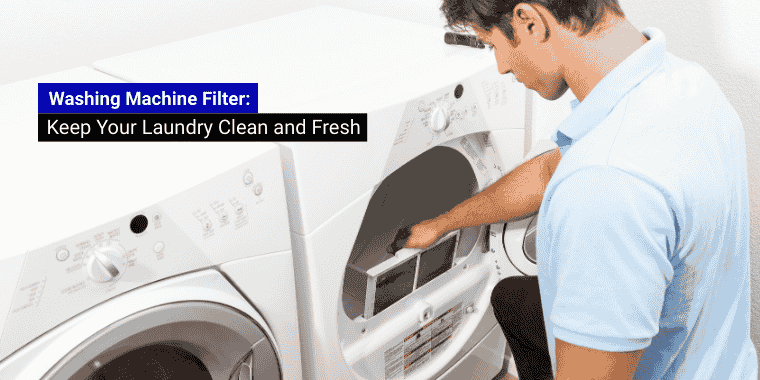
Washing Machine Filter: Keep Your Laundry Clean and Fresh

By Appliance Maintenance

Your washing machine does a lot of work for your home. It cleans clothes, towels, and sheets every week. However, many people forget an important part: the washing machine filter. This small part traps lint, dirt, and tiny debris from your laundry. If the filter gets clogged, your washer might not clean clothes well. Therefore, checking and cleaning the filter regularly helps your washer work well and keeps clothes fresh. Keeping the filter clean helps your washing machine work for many more years. Regular care prevents costly repairs and keeps laundry day easy.

Why the Washing Machine Filter Matters?

The filter is not just a small accessory. It protects your machine from blockages. When the filter is dirty, water drains slowly. This can make your laundry less clean than usual. Consequently, laundry takes longer and may smell bad.
Moreover, a clean filter keeps the motor and pump safe. It also prevents excess wear. Taking care of your washer regularly keeps it working well for a long time. To prevent frequent repairs, cleaning and maintaining the filter is an easy step. You can also get help from a washing machine repairman if needed.

Signs Your Washer Needs Cleaning

If your clothes are not getting clean, check the filter. Other signs include strange noises, leaks, or water not draining. Acting early can help prevent bigger problems.

  • Clothes stay wet after the cycle
  • Washer makes unusual sounds
  • Water backs up during cycles
  • Bad smell from the drum

Cleaning the washing machine filter is simple. You can remove lint and rinse it under water. In addition, regular cleaning improves washing performance and extends machine life.

How to Clean the Washing Machine Filter?

First, turn off the washer. Then, locate the filter—usually at the bottom or behind a panel. Remove it carefully and rinse it under running water to remove debris. Doing this regularly prevents clogs and keeps water flowing smoothly. Next, check the filter housing for dirt and wipe it clean before replacing the filter.
Lastly, ensure the filter is secured properly to prevent any leaks. If you are unsure, you can follow some simple washing machine repair tips to clean it safely. Cleaning the filter regularly protects your machine and keeps laundry fresh. It also helps your washer last longer and saves you from costly repairs.

Benefits of Regular Maintenance

Regular maintenance of your washer brings many advantages. It keeps the machine running smoothly and prevents issues.

  • Keeps clothes fresh and clean every wash
  • Prevents bad smells from building up in the washer
  • Helps the washing machine work more efficiently
  • Extends the life of your washing machine filter

By following these simple steps often, you save money and avoid problems. Also, laundry day becomes easier and less stressful.

Final Thoughts: Keep Your Laundry Fresh

Always check the filter for a cleaner wash. A simple cleaning routine improves your washing machine’s performance and prevents blockages. Furthermore, following small maintenance steps ensures your washer runs smoothly for years.
By paying attention to your washing machine filter, you avoid repairs and enjoy fresh, clean clothes every day. So, whether you follow simple cleaning tips or consult a washing machine repair man, regular care is the key. A clean filter makes doing laundry easier and less stressful.

winter appliance maintenance

Essential Winter Appliance Maintenance Tips for a Cozy Home

By Appliance Maintenance

Winter is around the corner, and this means everyone wants to be surrounded by a warm atmosphere and a cozy home. Carrying out winter appliance maintenance is vital to make your appliances work effectively as desired. Maintenance ensures that your home is just right and does not force you to spend much money to repair your appliances. Now, let’s introduce you to specific recommendations to allow you to maintain appliances in perfect condition during the cold months.

Why Winter Appliance Maintenance Is Important

Things that are outside in the cold do not like it very much. For example, during the winter, people want many devices, such as water heaters and heating systems. They might not do their normal jobs if you do not care for them. Winter appliance maintenance is an excellent way to make them work better and save money on repairs and energy bills. A small energy investment now will save a lot of money in the long run.

Essential Maintenance Tips for Winter Appliances

Clean Your Dryer and Vents

  • Always clean the lint filter after using it.
  • Check the vent to make sure it’s working properly.
  • This helps stop big clogs and keeps things safe from fires.

Check Your Refrigerator

  • Cleaning of the condenser coils to enhance its productivity.
  • Check that the door seals are positively sealed and not damaged.
  • The ideal temperature range for refrigeration is between 37°F and 40°F.

Maintain Your Dishwasher

  • Check the filters and scrub them.
  • Perform brown cleansing to remove build-up.
  • Look for any signs of leakage or improper draining.

When to Call for Appliance Repair

Sometimes, even after doing winter appliance maintenance, problems can still happen. For example, your heating system might not work properly, or your water heater might start leaking. If this happens, it’s a good idea to call a trusted expert in appliance repair. They can find the problem and fix it quickly, so your home stays warm and comfortable during winter.

Benefits of Regular Maintenance

  • Energy Savings: Taking care of home appliances helps them use less energy, which means your electricity bills stay low.
  • Longer Life: Regular check-ups keep machines working well for a long time without breaking.
  • Safety: Keeping appliances in good shape helps stop fires and other dangers from happening.

Final Words

Basically, winter appliance maintenance is the best way to keep your home warm and your appliances running smoothly. You will have a great winter if you follow these tips and get any problems fixed by appliance repair services. Taking care of your appliances today will help keep you warm this winter.