
Category

dryer repair tips

Appliance Repair

The Complete Home Appliance Repair & Maintenance Guide (2026)

By Appliance Maintenance, Dishwasher, Dishwasher problems, dryer repair sign, dryer repair tips, Refrigerator problems, Repairing, Washing machine, Washing Machine Repair
It is evident that appliances make life so easy since they enable us to store food, do laundry and washing dishes. Nevertheless, despite being durable and efficient, there comes a time when we need to fix them and maintain them. Knowledge on how to fix and maintain an appliance and when it should be repaired or replaced may save you hundreds of dollars a year.
Home Appliance Repair and Maintenance Manual (2026) will provide you with information on the maintenance process and all problems related to household appliances including whether to repair or change the appliance and other things.
Why is Maintenance of Appliances Necessary?
Homeowners tend to call professionals only when their appliance malfunctions completely.
Regular home appliance maintenance gives you such benefits as:
  • Increased appliance durability
  • Fewer costs on repairs
  • Better energy efficiency
  • No surprise breakdowns
  • Safety of your home

Maintaining the appliance performance according to manufacturer specifications

Maintenance is always cheaper than appliance repair.

Life Span of Key Household Appliances

Knowing the life span of your appliances will make it easier for you to choose whether to repair an appliance. In addition, proper maintenance can often add several years to these estimates.
Refrigerator 10–15 Years
Dishwasher 8–12 Years
Washing Machine 10–15 Years
Dryer 10–13 Years
Oven & Range 13–18 Years
Microwave 7–10 Years
Garbage Disposal 8–15 Years
Freezer 12–16 Years
Overall, proper maintenance can often add several years to these estimates.

Common Appliance Problems and Solutions

Not Cooled Refrigerator

A frequently seen problem with refrigerator repairing is the case of a warm refrigerator and cold freezer.

Causes

  • First, accumulation of dirt in the condenser coils.
  • Additionally, obstruction in the air vents.
  • In some cases, problematic evaporator fan.
  • Moreover, defrost system malfunctions.
  • Finally, broken compressor.

Maintenance

  • First, clean condenser coils every six months.
  • Next, clear air vents.
  • Also, test door seals.
  • Finally, maintain the temperature of 37–40 °F.
As a result, regular maintenance helps prevent costly refrigerator repairs.

Washing Machine Problems

Washing machines have high utilization and wear out. Therefore, routine maintenance is essential.

Common Trouble Spots

  • Won’t spin
  • Won’t drain
  • Water leaking
  • Too much vibration
  • Foul odors

Maintenance Tips

  • First, do not overload.
  • Next, perform monthly cleaning of the drain filter.
  • Also, keep the door open after each cycle.
  • Finally, use correct detergent.
Consequently, regular washing machine maintenance avoids costly repairs.

Dryer Doesn’t Heat

One of the most frequently searched appliance repair troubles is a dryer that runs but does not heat. However, this issue is often caused by a few common problems that can be identified early.

Reasons

  • First, failure of the heating element.
  • Additionally, fused thermal switch.
  • Moreover, obstruction of the dryer vent.
  • Finally, thermostat defect.

Maintenance Tips

  • After each load, clean the lint trap.
  • In addition, clean the dryer vents once per year.
  • Finally, avoid overfilling the drum.
As a result, cleaned dryer vents help improve performance and prevent fire hazards.

Dishwasher Troubles

Dishwashers become prone to drainage and cleaning troubles.

Symptoms

  • Water standing
  • Unwashed dishes
  • Foul smell
  • Water leaking

Prevention

  • Weekly filter cleaning.
  • Once per month use dishwasher cleaning.
  • Clean scraped dishes before loading.
  • Periodically check the spray arms.

Oven/Stove Trouble Spots

Kitchen appliances need regular maintenance as well.

Trouble Spots

  • Doesn’t heat
  • Baking unevenly
  • Burners won’t light
  • Temperature readings incorrect

Maintenance Tips

  • Clean up spills right away.
  • Replace faulty burner igniters.
  • Temperature calibration once a year.

Indicators That Your Appliance Is Needing Repair

Many appliances give off signals before they break down altogether.
Look out for:
  • Screaming noises
  • Odors of burning
  • Leaking water
  • High electricity bills
  • Cycling too often
  • Working slowly
  • Indicating error codes
  • Spoiled food
  • Clothes not drying
  • Ineffective cleaning cycles
Ignoring these signs can lead to bigger repair bills.

Appliance DIY Troubleshooting Guide

Before you call an appliance repair service, try these simple troubleshooting steps.

Check the Power Source

  • First, inspect the electrical outlet.
  • Next, examine the circuit breaker.
  • Also, inspect the power cord.

Check the Airflow

  • Finally, clean the air vents.
  • In addition, remove any obstructions.
  • If necessary, inspect and clean the filters.
Or, if you prefer a bullet-list style:

Check the Power Source

  • Inspect the electrical outlet.
  • Examine the circuit breaker.
  • Look for damage to the power cord.

Check the Airflow

  • Clean the air vents.
  • Remove any obstructions.
  • Inspect and clean the filters.

Choose Repair When:

  • Your appliance is less than 8 years old.
  • The repair costs less than half the price of a new one.
  • Replacement parts are easy to find.
  • Your appliance still works well.
  • Only a small part needs to be fixed.

Choose Replacement When:

  • Your appliance is older than its expected life.
  • The compressor or motor has failed.
  • It needs repairs many times each year.
  • Your energy bills keep getting higher.
  • The repair costs more than buying a new appliance.
A trusted appliance repair expert can help you choose the best option.
An experienced appliance repair service will guide you in making your choice.

Annual Appliance Maintenance Checklist

Using a seasonal maintenance schedule helps keep your appliances in excellent condition throughout the year.

Spring

  • First, clean your refrigerator’s coils.
  • Next, inspect your washing machine’s hoses.
  • Also, inspect the vent of your dryer.
  • Finally, clean your dishwasher filter.

Summer

  • During summer, inspect the refrigeration function of your fridge.
  • In addition, clean the freezer coils.
  • Then, inspect the ventilation function.

Fall

  • As the weather changes, clean your oven.
  • Next, inspect your smoke detectors near appliances.
  • Also, inspect your electrical cords.

Winter

  • Before winter, inspect your door seals.
  • Additionally, avoid freezing of your water lines.
  • Finally, do preventative maintenance of your appliances.
Overall, using an annual checklist will help prevent emergencies.

How to Extend Appliance Lifespan

Simple things matter greatly. For example:

Refrigerator

  • Avoid packing up shelves.
  • Also, service coils biannually.
  • If needed, replace faulty door seals.

Washing Machine

  • Load clothes evenly.
  • In addition, use HE soap.
  • Furthermore, clean the tub each month.

Dryer

  • Clean the lint filter after each cycle.
  • Additionally, check ventilation every year.

Dishwasher

  • Clean spray arms.
  • Also, use rinse additive.
  • Finally, remove food bits.

Oven

  • Avoid harsh chemicals.
  • Instead, clean spills instantly.
  • If necessary, replace broken seals.

Advantages of Professional Appliance Repairs

While DIY maintenance is helpful, professionals have many benefits.
Professional appliance repairs offer:
  • Correct diagnosis
  • Authentic replacement parts
  • Protection under warranty
  • Safe electrical repairs
  • Increased appliance lifespan
  • Better efficiency
Furthermore, hiring an expert appliance repair company will save you from the extra harm done by incorrect appliance repairs.

How to Select a Proper Appliance Repair Company

Not all repair companies have the same expertise level. Therefore, choosing the right service provider is important.

What should you look for?

  • First, licensed specialists
  • Next, same day service
  • In addition, good reviews of customers
  • Also, warranty for repairs
  • Furthermore, experience with popular brands
  • Moreover, reasonable prices
  • Finally, emergency repairs
As a result, selecting a good local appliance repair company will ensure your safety.

Appliance Maintenance Mistakes Most People Neglect

The majority of malfunctions occur simply because basic maintenance procedures are neglected. Therefore, remember to:
  • First, vacuum the refrigerator coils twice per year.
  • Next, change any broken water supply lines.
  • Also, wash the washing machine filters on a monthly basis.
  • In addition, take out the lint buildup around the dryer.
  • Furthermore, check the appliance cords for damages.
  • Moreover, keep the appliances at the correct level.
  • If necessary, change any damaged door seals.
  • Finally, schedule an annual maintenance visit by a professional.
In the long run, all these steps will help you minimize your appliance repair costs.
The majority of malfunctions occur simply because basic maintenance procedures are neglected.

Remember to:

  • Clean the refrigerator coils twice a year.
  • Replace broken water lines.
  • Clean the washing machine filter every month.
  • Remove lint from the dryer.
  • Check power cords for damage.
  • Keep appliances level.
  • Replace worn door seals.
  • Get a professional inspection once a year.
These steps are easy to follow. As a result, they help prevent breakdowns. You can also lower repair costs. In addition, your appliances will last longer.

Conclusion

Appliances are expensive purchases, and therefore proper appliance care is crucial. Regular maintenance and repair services will help to increase the lifespan of your refrigerator, washer, dryer, dishwasher, oven and many other appliances.
Although some faults can be rectified through maintenance hacks, it is imperative that all recurring faults are fixed by an appliance repair specialist to guarantee efficiency of your appliance in the years to come, such as in 2026.

Frequently Asked Questions

How often should I service my home appliances?

Most major appliances should be inspected and cleaned at least once a year. High-use appliances like dryers and refrigerators benefit from more frequent maintenance.

What is the most common appliance to break down?

Refrigerators, washing machines, dryers, and dishwashers are among the most frequently repaired household appliances due to regular daily use.

Is appliance repair cheaper than replacement?

In many cases, yes. If the repair costs less than 50% of a new appliance and the unit is relatively new, repairing it is usually the better option.

What appliances require regular maintenance?

Refrigerators, washers, dryers, dishwashers, ovens, freezers, and garbage disposals all require routine cleaning and inspection to maintain peak performance.
Dryer Repair near me

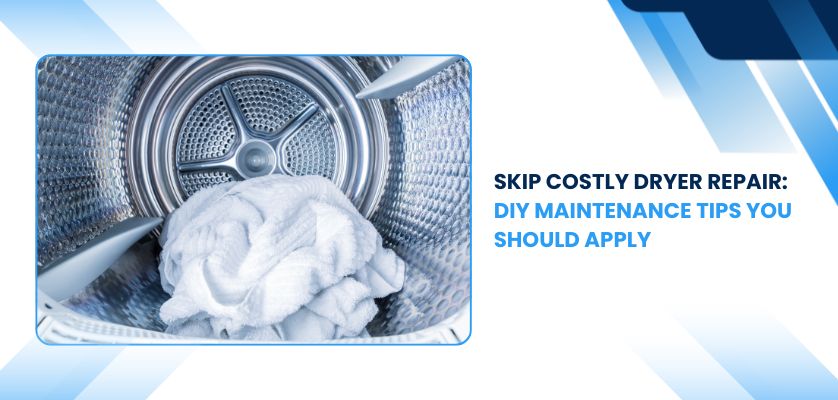
Skip Costly Dryer Repair: DIY Maintenance Tips You Should Apply

By dryer repair sign, dryer repair tips, Dryer repairing

Are you sick of paying for expensive dryer repair services? Are you wondering how to maintain your dryer in the best possible way so that you don’t need to hurt your pocket? Fortunately, you can do that! You can keep your dryer operating smoothly and save money on repair services by performing basic do-it-yourself maintenance. The keys are routine cleaning, vent inspection, and appropriate use. By following these simple steps, you can avoid serious problems that might result in costly repairs for your appliance. So, let’s discuss essential but simple do-it-yourself dryer maintenance tips in this blog to help you avoid expensive repairs and extend the life of your dryer.

dryer maintenance

DIY Maintenance Tips To Avoid Frequent Dryer Repair

1. Clean the Lint Filter Regularly

To keep your dryer working efficiently and to help prevent potential fires, lint filters must be cleaned after every use. Believe it or not, a clogged lint filter not only prevents your dryer from working properly, but it also causes more wear and tear on the components as well. This is why it should always be cleaned after every cycle.

2. Clear the Dryer Vent

Lint can accumulate in the dryer vent over time. This accumulation can decrease dryer efficiency. Moreover, in the worst situation, it can create a fire hazard. Thus, it is important to clear the dryer vent every few months to improve airflow. As a result, this increases clothing drying speed and efficiency.

3. Level the Dryer

Make sure to set your dryer onto a level surface. If the dryer is uneven, it will vibrate badly. Consequently, it will wear out the components at an increased rate. Hence, it is important to adjust the legs of the dryer to level it out. As a result, it prevents unnecessary strain on the dryer motor and drum.

4. Check the Dryer Belt

The dryer belt is what allows the dryer drum to spin. If the dryer belt is starting to wear out, you will notice that the dryer makes strange noises. Eventually, it will stop spinning at all. Check the dryer belt for any signs of wear and replace it as soon as possible to prevent any other damage.

5. Clean the Exterior and Drum

Accumulation of dirt and soap scum over time can cause big problems for your dryer in the future. Therefore, you should clean your dryer’s exterior and drum with a damp cloth to prevent dirt and soap scum from accumulating. This will keep your dryer in excellent working order and in good condition for a longer time.

6. Don’t Overload the Dryer

Don’t be tempted to put as many clothes as you possibly can into your dryer. Overloading your dryer may cause it to exert pressure on its internal mechanisms, such as the motor. Always refer to your dryer’s user guide for proper loading capacity to avoid exerting undue pressure on your dryer.

Conclusion

By following these simple guidelines, you will be able to keep your dryer in excellent working order without having to resort to costly dryer repair services. However, in case you need dryer repair services in Fort Lauderdale, you should know that reliable repair services are just around the corner. You simply have to type “dryer repair near me” in your browser to get in touch with a reliable dryer repair service in your area.

Samsung dryer not heating

Why Is Your Samsung Dryer Not Heating? Easy Fixes You Can Try

By dryer repair tips

Doing laundry can get frustrating when your Samsung dryer not heating causes your clothes to stay damp. You put your wet clothes in, press start, and wait—only to find them still wet after the cycle ends. The good news is that many times, this issue is easy to fix. Often, it could be a wrong setting or a blocked vent causing the problem. Sometimes, a heating part inside the dryer might have worn out or broken.

Start by checking the heat settings on your dryer. Also, be sure to clean out the lint screen and vents. These simple steps often fix the problem. If your dryer still isn’t heating, it’s a good idea to get help from a professional. Don’t worry—most dryer troubles are minor and can be fixed with a few easy steps to get your clothes dry and warm again.

Common Reasons Why Your Samsung Dryer Not Heating

If your Samsung dryer not heating properly, try these simple checks first. They’re quick and can save you a service call:

  • Check the power plug: Make sure it’s fully plugged in. A loose connection can stop the heating part from working.
  • Test the outlet: Sometimes, the outlet powers the drum motor but not the heater. Plug another device in to make sure the outlet works properly.
  • Reset the circuit breaker: If the breaker has tripped, it may have cut power to just the heating element. Switch it off and back on to reset.
  • Check your dryer settings: Avoid no-heat options like “Air Fluff” or “No Heat.” Choose a heat setting such as “High Heat” and try again.

Samsung Dryer Not Heating? Check These Faulty Heating Parts

If your Samsung dryer not heating issue continues, the heating element may be damaged. This component heats the air inside the drum, and it can fail over time. When broken, the dryer drum will turn, but no warm air is produced. Replacing this part requires tools and caution, so only do this if you’re comfortable.
Another part that might be causing trouble is the thermal fuse. This small safety device stops the dryer from overheating. If the fuse blows, the dryer might run but won’t heat up. This often happens when vents are clogged or the dryer overheats. Fixing it means replacing the fuse with a new one.

When to Call a Dryer Repair Expert?

If you have tried all the basic fixes and your Samsung dryer not heating problem still isn’t resolved, it’s best to contact a professional dryer repair technician. Some problems are hard to detect and need special equipment. Experts know how to test all parts carefully and find the cause quickly. Since they repair dryers regularly, they can fix it faster and safer than trying to do it yourself.
Also, if you don’t know how to safely open or repair your dryer, let a professional handle it. Some parts inside can be sharp or carry electricity, and mistakes could cause injury or damage. It’s wise to reach out to trusted dryer repair services, ask any questions, and schedule an appointment. This way, your dryer will work properly again, and you’ll avoid bigger issues later.

Cleaning Can Prevent Major Dryer Problems

A very common reason for a Samsung dryer not heating is clogged vents. When lint blocks airflow, the dryer may automatically shut off the heat to avoid overheating. This causes clothes to take longer to dry and can strain your dryer.
Be sure to clean the lint filter after every load—it only takes a few seconds. Also, clean the vent pipe monthly to keep air flowing well. This simple step helps prevent serious problems and reduces the chances of needing appliance repair in the future.

Dryer Static

How to Reduce Dryer Static: Easy and Effective Solutions

By dryer repair tips

Dryer static is one of those laundry problems that bother homeowners. Those little shocks, clothes clinging to one another, and lint buildup are all static electricity. Usually, a little static will form when clothes tumble in a dry environment.
If you know some tips and tricks along with a few home remedies, you could always keep dryer static at bay and enjoy fresh, soft laundry every time.

Causes of Dryer Static

Low humidity in the environment and over-drying also enhance this phenomenon. Usually, synthetic fabrics are the main problem for this.

Working Hacks to Reduce Dryer Static

For example, try these simple but proven methods of reducing static cling:

  • Do not over-dry

Dry clothes create more static. Also, set the sensor for moisture or cut down on drying time.

  • Wool Dryer Balls

They naturally soften the clothes and reduce friction, thereby limiting the buildup of static.

  • Add a Damp Cloth

Additionally, place a damp cloth over it during the final 10 minutes of drying. It also adds moisture back into the dryer, reducing static.

  • Alternate Fabric Softeners

Also, use liquids or sheets to neutralize Dryer Static. However, do not apply them excessively, as an excess may hamper absorbency.

  • Dry by Fabric Type

Keep synthetics separated from cotton to avoid excessive static build-up.

  • Air Dry Slightly

Pull out your clothes when they are still a bit damp and air dry them for a bit–this way, they will not get too dry and produce static.

This Works: Anti-Static Laundry Tips

Still craving more anti-static laundry tips? Taking these additional steps will have an even bigger impact.
White salt solution also softens fabric and fights static. Moreover, give clothes room to tumble. Overloading increases rubbing, which causes more static. Also, you can use baking soda. It helps keep fabrics soft while supporting a balanced pH.

How Dryer Repair Service Helps with Static Issues?

If you have tried all these tips but still fight with dryer static, your machine may be the problem. Here is how a dryer repair duty can help:

  • Fixing Faulty Moisture Sensors

Moisture sensors also help prevent overdrying. A broken sensor may be caused by running the dryer too long.

  • Replacing Broken Thermostats

If the thermostat is not working right, your dryer can be care to overheating. That leads to dry air and static.

  • Cleaning the Lint Trap and Vents

A blocked lint trap reduces light wind, causing clothes to over-dry. Regular maintenance helps prevent this.

  • Checking Heating Elements

Broken or uneven warming causes hot spots, which dry clothes excessively fast in certain areas.

  • Inspecting Drum Rotation

Uneven tumbling increases fabric rubbing. A dryer repair service can ensure smooth spinning.

The Final Call

Dryer static is not a problem. Follow our anti-static washing tips and ask a professional dryer repair service if required. So, with just a few changes, your clothes will feel softer, soap, and static-free.

Signs of Dryer Repair

Skip the Breakdown: Spot Signs of Dryer Repair Fast

By dryer repair sign, dryer repair tips

Laundry takes the word “everlasting” seriously. That’s why things keep piling up for you. Thankfully, a dryer brings some comfort to your chore. However, problems that go unnoticed become damaging. And sometimes, you can easily overlook them. So, how do you spot those early signs of dryer repair? Read on to avoid the trouble!

Dryer Not Starting? Spot These Signs of Dryer Repair

Did the dryer hesitate even when you kept its power on? So, it’s plugged in. The outlet works well. Moreover, nothing tripped. Sometimes, the trouble starts with a worn-out start switch. Or, the door switch isn’t clicking right. And let’s not forget the thermal fuse. So, you get a hint that it’s time for a dryer repair.

Heatless Spin: When Drying Doesn’t Deliver Results

Do your clothes still feel wet after drying? Firstly, you might have put in too much. Now, that’s not all. Think again! Maybe your dryer’s heating element is upset. And you let a professional appliance repair company help. So, it’s one of those hard-to-ignore signs of dryer repair.

Weird Sounds Ahead: Tell-Tale Signs of Dryer Repair

Next, you may think your dryer looks and works fine. But suddenly, it surprises you with weird bumps and squeaks. Is that possible? Yes! And let’s not call it normal. In fact, it might mean something inside is off. Maybe the idler pulley lost its stability. Or, the drum rollers need a fix. In short, these noises indicate you need a dryer repair service.

Overheating Alert: Your Dryer’s Too Hot to Handle

Too much heat in a dryer sounds risky, right? Well, it is, and that can spark a fire. So, isn’t it one of the clear signs of dryer repair? Yes. And the blame would easily go to a clogged vent. Or, the heating element lost its impact. Other than that, a broken thermostat can also cause that overheating mess.

Humid Clues and Endless Drying? Call a Professional Appliance Repair Company

Nobody likes it when drying takes too long. We know that’s already a pain. Now, what if the room feels damp too? Well, that doesn’t sound normal. Your dryer might be letting out wet air. Maybe it’s a sealing trouble. Or the vent has a blockage.

Blinking Error Message: Isn’t It Time to Decode That Dryer?

Some dryers show error codes when things go wrong. Sometimes, turning it off and then on clears it all. But what if the same message keeps showing? Well, that suggests trouble has caught your dryer. And it’s time for expert help.

These signs of dryer repair prepare us for help. As a result, we can act fast. And avoid a long-term issue. So, let experts bring your dryer to life again. And get you to a place of managing chores with ease.