Category

Repairing

Washing Machine

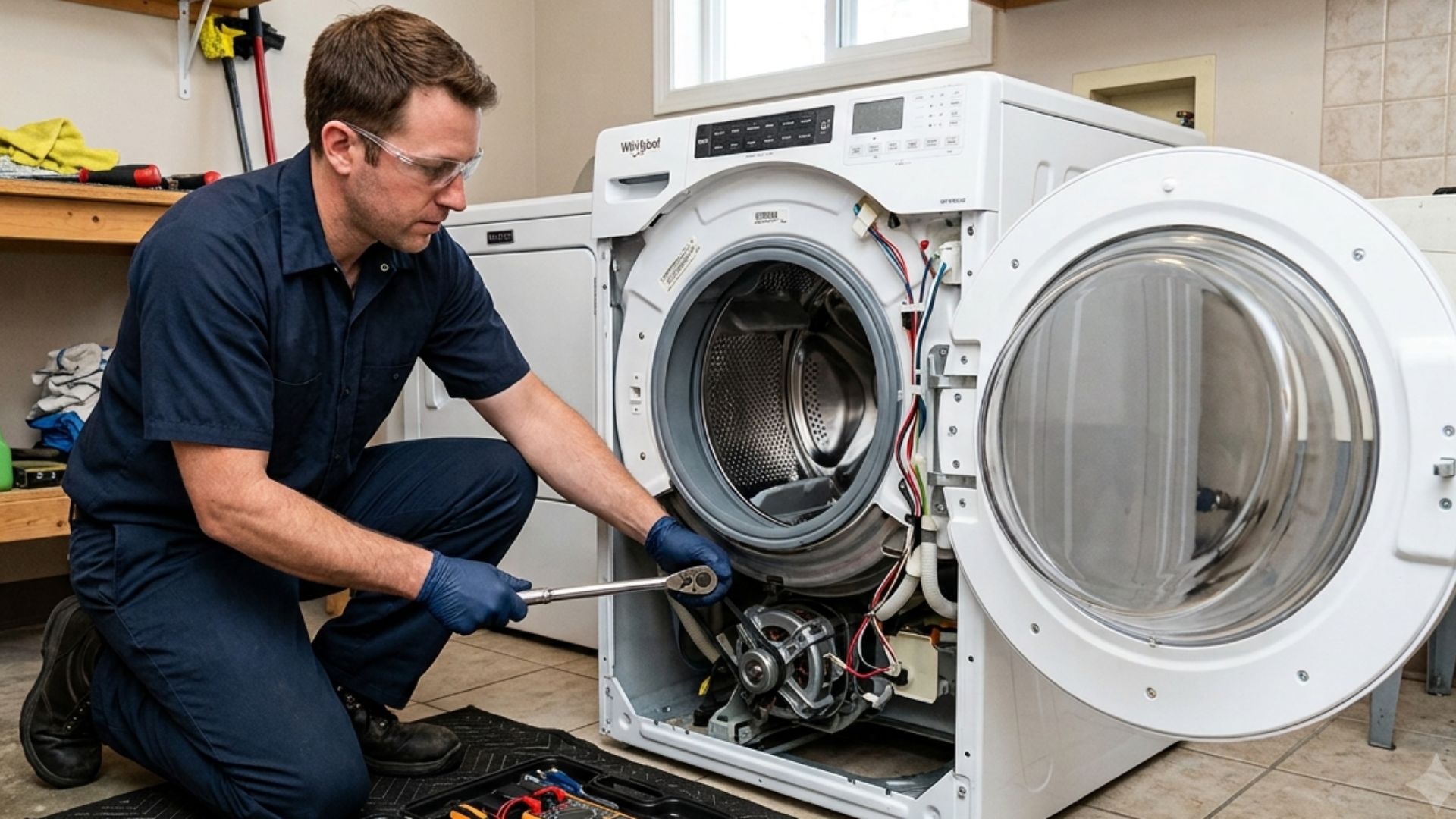
Washing Machine Not Draining? Causes, Fixes & Repair Tips

By Appliance Maintenance, Repairing, Washing machine, Washing Machine Repair, wasing machine service
A washing machine that does not drain can quickly make day a frustrating experience. You might notice water left inside the drum after the cycle is done. In some cases the machine might stop before the spin cycle even starts.
The good news is that a clogged hose, a blocked filter or a small object can often be the reason. However some drainage problems might need help from a professional who repairs washing machines.

Why Is My Washing Machine Not Draining?

Several parts help remove water from your washing machine. However, a blockage can stop these parts from working properly. As a result, the washing machine may leave water inside the drum.
So, what causes this problem? Here are some common reasons.

1. Clogged Drain Hose

The drain hose carries wastewater from the washing machine to your home’s drain. However, a bent, blocked, or dirty hose can slow down or stop the water flow.
First, check the drain hose carefully. Look for sharp bends, kinks, or anything that may block the hose. If you find a blockage, remove it carefully when it is safe to do so.
Also, make sure you place the hose correctly. Keep it free from pressure behind the machine. This way, water can flow out smoothly during the drain cycle.

2. Blocked Drain Filter

Most washing machines have a drain filter that catches things like lint, coins, hair and other small items. Over time this filter can get filled up. Stop working.
A blocked filter can slow down. Stop the drainage completely. Check the owners manual before trying to clean the filter because the location and method for cleaning can be different for each model.

3. Faulty Drain Pump

The drain pump is the part that pushes the water out of the washing machine. If the pump is broken or stops working the water can stay inside the drum.
You might hear sounds like humming or buzzing when the machine tries to drain. If cleaning the filter and checking the hose does not fix the problem the drain pump might need to be checked or replaced.

4. Foreign Objects in the Pump

items like coins, buttons, socks or pieces of clothes can sometimes end up in the drainage system.
These items can get stuck in the pump. Stop the water from draining. Do not try to push anything into the pump while trying to remove a blockage. If you can’t reach it safely call a trained repair technician.
5. Blocked Household Drain
Sometimes the washing machine is working fine. The home drain is the problem. If water flows back, near the drain hose the plumbing system might need to be looked at.
What Can You Do When Your Washing Machine Won’t Drain?

Before you call a washing machine repair service, try a few simple checks.

First, switch off the washing machine and unplug it from the power supply. Next, check the drain hose for kinks, bends, or visible blockages. If your washing machine has an accessible drain filter, clean it carefully. However, always follow the manufacturer’s instructions before removing or cleaning the filter.
You should also check the display for an error code. If you see one, check the owner’s manual. The manual can help you understand what the code means and what steps you should take.
In addition, avoid running the washing machine while water remains inside the drum. Running another cycle can put extra pressure on the drain system. As a result, it may make the problem worse.

When Should You Call for Washing Machine Repair?

If your washing machine still will not drain after these basic checks, you may need professional help.
  • Contact a qualified technician if you notice:
  • The drain pump makes loud, unusual, or strange noises.
  • Water remains inside the drum after every cycle.
  • The washing machine displays a drainage error.
  • Water leaks while the machine drains.
  • The washing machine stops before the spin cycle.
  • The drain pump or electrical parts look damaged.
A trained technician can inspect the drain hose, drain filter, pump, wiring, and other parts of the washing machine. After checking these components, the technician can identify the cause and recommend the right repair.

How to Prevent Drainage Problems

Regular maintenance can help stop washing machine drainage problems. First clean the drain filter often as the manufacturer says. Also check your clothing pockets before you start a wash. Coins, buttons, tissues and other small things can go into the drain system. Cause clogs.
Also don’t wash things that can break apart easily. These things can let out lint and trash into the washing machine.. Always use the right amount of detergent. Using much detergent can make buildup and hurt how the machine works.
Lastly look at the drain hose often. Make sure it stays straight and has no bends or damage. By doing these things you can help your washing machine drain well and cut down on surprise repairs.
Lastly check the drain hose now and then. Make sure it is not bent, twisted, broken or hurt. A clean and correctly placed drain hose lets water go out smoothly.

Get Professional Washing Machine Repair

A washing machine that does not drain should not be ignored. Although a simple blockage may be easy to fix, repeated drainage problems can point to a damaged part.
Therefore, if your washing machine continues to hold water, contact a professional washing machine repair service. A qualified technician can check the machine and find the cause of the problem. After that, they can recommend the right repair and help your washing machine return to normal operation.

Frequently Asked Questions

Why is my washing machine not draining?

A washing machine may not drain because of a clogged drain hose, blocked filter, faulty drain pump, or blocked household drain. First, check the hose and filter. If the problem continues, contact a professional washing machine repair service.

How do I fix a washing machine that will not drain?

First, switch off and unplug the machine. Next, check the drain hose for kinks or blockages. Also, clean the drain filter if your model allows it. However, call a technician if the machine still holds water.

Can a clogged drain hose stop a washing machine from draining?

Yes. A clogged or kinked drain hose can restrict water flow. As a result, the washing machine may leave water inside the drum or stop before the spin cycle.

refrigerator repair

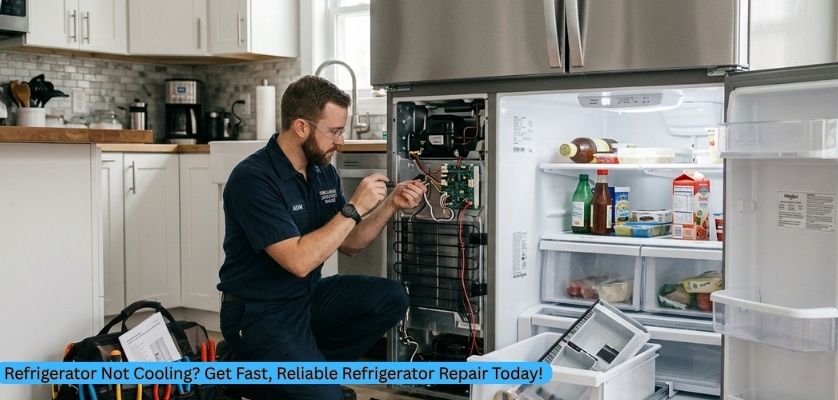
Refrigerator Not Cooling? 7 Causes and Quick Fixes That Work

By Appliance Maintenance, Home Appliance Tips, Refrigerator problems, refrigerator repair, Repairing
I have seen a refrigerator that stops cooling and refrigerator can spoil food quickly. You may notice food, soft ice cream spoiled milk or water that never gets cold. Sometimes the freezer still works while refrigerator stays warm.
The USDA recommends keeping refrigerator at 40°F or lower and keeping freezer at 0°F. If perishable food has been above 40°F for than two hours it is safer to throw it away. Use the one-hour limit when temperatures reach 90°F or higher. Never taste food to decide if it is safe.

Before booking refrigerator repair check these causes.

1. The Temperature Setting Is Warm

Start with the easiest fix. Set refrigerator between 35°F and 38°F. Set freezer to 0°F. Check whether vacation mode, demo mode or showroom mode is active.

Use an appliance thermometer to confirm the temperature. After changing the setting allow, about 24 hours for refrigerator temperature to stabilize.

2. Blocked Vents or an Overloaded Refrigerator

Cold air needs space to move around. If you push food close to the inside vents you might block the airflow. This can make some spots inside your refrigerator feel warm.

Try to move your food containers from the back wall, the ceiling and the vents. You should also check the return vents in the freezer. Make sure to leave some space between your food items so the cold air can move around your refrigerator easily.

3. Dirty Condenser Coils

When the condenser coils get dirty your refrigerator has to work harder to get rid of heat. First unplug the refrigerator. Then find the coils under the refrigerator or behind the grille.

Use a brush or a vacuum to get rid of the dust and dirt. If you have pets at home you might want to clean the condenser coils often. ENERGY STAR says that keeping your refrigerator clean helps the refrigerator run better and save energy.

4. A Damaged Door Gasket

If the door seal is old or damaged, cold air can leak out. As a result, your refrigerator may have to work harder to stay cool.
To check the seal, try the paper test. First, place a sheet of paper between the door and the frame. Then, close the refrigerator door. If the paper slips out easily, the door gasket may not be sealing properly.
Next, clean the gasket with warm water and a little mild soap. Also, check for cracks, gaps, or hard spots.
Finally, if the gasket is damaged, replace it. A new door seal may fix the cooling problem and, in some cases, help you avoid a costly refrigerator repair.

5. Frost Is Blocking the Evaporator

frost on the freezers back wall can block airflow into the refrigerator section. I have seen this happen when a defrost heater, sensor, timer or control board has failed.
If it is safe according to your manufacturers instructions unplug the refrigerator. Let the ice melt naturally. I would never use a knife to remove ice or a blow dryer.
If frost returns within a days schedule professional service.

6. The Evaporator Fan Is Not Working

The evaporator fan moves air, from the freezer into the refrigerator. I have noticed that if it fails the freezer stays cold while the refrigerator becomes warm.
Listen for the fan when the freezer door is closed. If you hear airflow or unusual noises that can indicate a problem.
If the motor stays silent I recommend refrigerator repair.

7. Compressor, Relay or Refrigerant Problems

Repeated clicking every minutes may show a faulty start relay or compressor problem. I have heard that a compressor that runs constantly but cannot cool the refrigerator may also show a sealed‑system issue.
Refrigerant does not normally disappear on its own. So, if the refrigerant level is low, there may be a leak in the system. In that case, the leak needs to be found and repaired.
For your safety, never handle refrigerant lines, capacitors, or exposed electrical parts yourself. Instead, let a trained professional inspect the appliance and carry out the necessary refrigerator repair.
When Should You Call for Refrigerator Repair?

When Should You Call for Refrigerator Repair?

However, some refrigerator problems need professional help. Call a trained technician if you notice burning smells, sparks, melted wiring, repeated breaker trips, or a very hot compressor. Also, if the refrigerator does not cool after simple checks, it may be time for professional refrigerator repair.

A Simple Symptom Guide

  • Freezer cold, refrigerator warm: This may point to a blocked vent, frost buildup, or a fan problem.
  • Both sections warm: This could be caused by dirty coils, a bad relay, compressor trouble, or a sealed-system issue.
  • Heavy frost: This often points to a defrost problem.
  • Clicking sounds: These may signal a faulty relay or compressor.
  • Water underneath: A blocked drain could be the cause.

Keep Your Refrigerator Working Properly

Fortunately, regular care can help prevent many cooling problems. First, clean the condenser coils about twice a year. Also, keep the air vents clear and check the door seals regularly.
In addition, use an appliance thermometer to monitor the temperature. After making a repair or adjustment, check the refrigerator again within 4–24 hours.
Finally, if the problem returns or the refrigerator still cannot stay cold, contact a professional for refrigerator repair.
Start with checks. If the problem involves components, fans, compressors or refrigerant professional refrigerator repair can help diagnose the issue safely and prevent further damage.

Frequently Asked Questions About Refrigerator Cooling Problems

Why is my refrigerator not cooling but the freezer is working?

This often happens because cold air cannot move from the freezer to the refrigerator. Blocked vents, heavy frost, or a failed evaporator fan are common causes. If basic airflow checks do not help, you may need professional refrigerator repair.

How long does it take for a refrigerator to cool after adjusting the temperature?

A refrigerator can take several hours to reach the correct temperature. After changing the setting, allow about 24 hours for the temperature to stabilize before deciding there is a serious cooling problem.

What temperature should a refrigerator be?

The refrigerator should generally stay at 40°F or lower. For better food safety, many manufacturers recommend setting the refrigerator around 35°F to 38°F and the freezer at 0°F.

Appliance Repair

The Complete Home Appliance Repair & Maintenance Guide (2026)

By Appliance Maintenance, Dishwasher, Dishwasher problems, dryer repair sign, dryer repair tips, Refrigerator problems, Repairing, Washing machine, Washing Machine Repair
It is evident that appliances make life so easy since they enable us to store food, do laundry and washing dishes. Nevertheless, despite being durable and efficient, there comes a time when we need to fix them and maintain them. Knowledge on how to fix and maintain an appliance and when it should be repaired or replaced may save you hundreds of dollars a year.
Home Appliance Repair and Maintenance Manual (2026) will provide you with information on the maintenance process and all problems related to household appliances including whether to repair or change the appliance and other things.
Why is Maintenance of Appliances Necessary?
Homeowners tend to call professionals only when their appliance malfunctions completely.
Regular home appliance maintenance gives you such benefits as:
  • Increased appliance durability
  • Fewer costs on repairs
  • Better energy efficiency
  • No surprise breakdowns
  • Safety of your home

Maintaining the appliance performance according to manufacturer specifications

Maintenance is always cheaper than appliance repair.

Life Span of Key Household Appliances

Knowing the life span of your appliances will make it easier for you to choose whether to repair an appliance. In addition, proper maintenance can often add several years to these estimates.
Refrigerator 10–15 Years
Dishwasher 8–12 Years
Washing Machine 10–15 Years
Dryer 10–13 Years
Oven & Range 13–18 Years
Microwave 7–10 Years
Garbage Disposal 8–15 Years
Freezer 12–16 Years
Overall, proper maintenance can often add several years to these estimates.

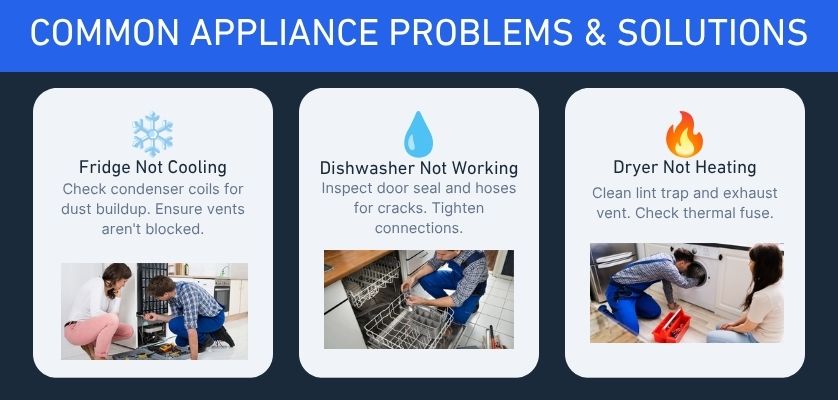
Common Appliance Problems and Solutions

Not Cooled Refrigerator

A frequently seen problem with refrigerator repairing is the case of a warm refrigerator and cold freezer.

Causes

  • First, accumulation of dirt in the condenser coils.
  • Additionally, obstruction in the air vents.
  • In some cases, problematic evaporator fan.
  • Moreover, defrost system malfunctions.
  • Finally, broken compressor.

Maintenance

  • First, clean condenser coils every six months.
  • Next, clear air vents.
  • Also, test door seals.
  • Finally, maintain the temperature of 37–40 °F.
As a result, regular maintenance helps prevent costly refrigerator repairs.

Washing Machine Problems

Washing machines have high utilization and wear out. Therefore, routine maintenance is essential.

Common Trouble Spots

  • Won’t spin
  • Won’t drain
  • Water leaking
  • Too much vibration
  • Foul odors

Maintenance Tips

  • First, do not overload.
  • Next, perform monthly cleaning of the drain filter.
  • Also, keep the door open after each cycle.
  • Finally, use correct detergent.
Consequently, regular washing machine maintenance avoids costly repairs.

Dryer Doesn’t Heat

One of the most frequently searched appliance repair troubles is a dryer that runs but does not heat. However, this issue is often caused by a few common problems that can be identified early.

Reasons

  • First, failure of the heating element.
  • Additionally, fused thermal switch.
  • Moreover, obstruction of the dryer vent.
  • Finally, thermostat defect.

Maintenance Tips

  • After each load, clean the lint trap.
  • In addition, clean the dryer vents once per year.
  • Finally, avoid overfilling the drum.
As a result, cleaned dryer vents help improve performance and prevent fire hazards.

Dishwasher Troubles

Dishwashers become prone to drainage and cleaning troubles.

Symptoms

  • Water standing
  • Unwashed dishes
  • Foul smell
  • Water leaking

Prevention

  • Weekly filter cleaning.
  • Once per month use dishwasher cleaning.
  • Clean scraped dishes before loading.
  • Periodically check the spray arms.

Oven/Stove Trouble Spots

Kitchen appliances need regular maintenance as well.

Trouble Spots

  • Doesn’t heat
  • Baking unevenly
  • Burners won’t light
  • Temperature readings incorrect

Maintenance Tips

  • Clean up spills right away.
  • Replace faulty burner igniters.
  • Temperature calibration once a year.

Indicators That Your Appliance Is Needing Repair

Many appliances give off signals before they break down altogether.
Look out for:
  • Screaming noises
  • Odors of burning
  • Leaking water
  • High electricity bills
  • Cycling too often
  • Working slowly
  • Indicating error codes
  • Spoiled food
  • Clothes not drying
  • Ineffective cleaning cycles
Ignoring these signs can lead to bigger repair bills.

Appliance DIY Troubleshooting Guide

Before you call an appliance repair service, try these simple troubleshooting steps.

Check the Power Source

  • First, inspect the electrical outlet.
  • Next, examine the circuit breaker.
  • Also, inspect the power cord.

Check the Airflow

  • Finally, clean the air vents.
  • In addition, remove any obstructions.
  • If necessary, inspect and clean the filters.
Or, if you prefer a bullet-list style:

Check the Power Source

  • Inspect the electrical outlet.
  • Examine the circuit breaker.
  • Look for damage to the power cord.

Check the Airflow

  • Clean the air vents.
  • Remove any obstructions.
  • Inspect and clean the filters.

Choose Repair When:

  • Your appliance is less than 8 years old.
  • The repair costs less than half the price of a new one.
  • Replacement parts are easy to find.
  • Your appliance still works well.
  • Only a small part needs to be fixed.

Choose Replacement When:

  • Your appliance is older than its expected life.
  • The compressor or motor has failed.
  • It needs repairs many times each year.
  • Your energy bills keep getting higher.
  • The repair costs more than buying a new appliance.
A trusted appliance repair expert can help you choose the best option.
An experienced appliance repair service will guide you in making your choice.

Annual Appliance Maintenance Checklist

Using a seasonal maintenance schedule helps keep your appliances in excellent condition throughout the year.

Spring

  • First, clean your refrigerator’s coils.
  • Next, inspect your washing machine’s hoses.
  • Also, inspect the vent of your dryer.
  • Finally, clean your dishwasher filter.

Summer

  • During summer, inspect the refrigeration function of your fridge.
  • In addition, clean the freezer coils.
  • Then, inspect the ventilation function.

Fall

  • As the weather changes, clean your oven.
  • Next, inspect your smoke detectors near appliances.
  • Also, inspect your electrical cords.

Winter

  • Before winter, inspect your door seals.
  • Additionally, avoid freezing of your water lines.
  • Finally, do preventative maintenance of your appliances.
Overall, using an annual checklist will help prevent emergencies.

How to Extend Appliance Lifespan

Simple things matter greatly. For example:

Refrigerator

  • Avoid packing up shelves.
  • Also, service coils biannually.
  • If needed, replace faulty door seals.

Washing Machine

  • Load clothes evenly.
  • In addition, use HE soap.
  • Furthermore, clean the tub each month.

Dryer

  • Clean the lint filter after each cycle.
  • Additionally, check ventilation every year.

Dishwasher

  • Clean spray arms.
  • Also, use rinse additive.
  • Finally, remove food bits.

Oven

  • Avoid harsh chemicals.
  • Instead, clean spills instantly.
  • If necessary, replace broken seals.

Advantages of Professional Appliance Repairs

While DIY maintenance is helpful, professionals have many benefits.
Professional appliance repairs offer:
  • Correct diagnosis
  • Authentic replacement parts
  • Protection under warranty
  • Safe electrical repairs
  • Increased appliance lifespan
  • Better efficiency
Furthermore, hiring an expert appliance repair company will save you from the extra harm done by incorrect appliance repairs.

How to Select a Proper Appliance Repair Company

Not all repair companies have the same expertise level. Therefore, choosing the right service provider is important.

What should you look for?

  • First, licensed specialists
  • Next, same day service
  • In addition, good reviews of customers
  • Also, warranty for repairs
  • Furthermore, experience with popular brands
  • Moreover, reasonable prices
  • Finally, emergency repairs
As a result, selecting a good local appliance repair company will ensure your safety.

Appliance Maintenance Mistakes Most People Neglect

The majority of malfunctions occur simply because basic maintenance procedures are neglected. Therefore, remember to:
  • First, vacuum the refrigerator coils twice per year.
  • Next, change any broken water supply lines.
  • Also, wash the washing machine filters on a monthly basis.
  • In addition, take out the lint buildup around the dryer.
  • Furthermore, check the appliance cords for damages.
  • Moreover, keep the appliances at the correct level.
  • If necessary, change any damaged door seals.
  • Finally, schedule an annual maintenance visit by a professional.
In the long run, all these steps will help you minimize your appliance repair costs.
The majority of malfunctions occur simply because basic maintenance procedures are neglected.

Remember to:

  • Clean the refrigerator coils twice a year.
  • Replace broken water lines.
  • Clean the washing machine filter every month.
  • Remove lint from the dryer.
  • Check power cords for damage.
  • Keep appliances level.
  • Replace worn door seals.
  • Get a professional inspection once a year.
These steps are easy to follow. As a result, they help prevent breakdowns. You can also lower repair costs. In addition, your appliances will last longer.

Conclusion

Appliances are expensive purchases, and therefore proper appliance care is crucial. Regular maintenance and repair services will help to increase the lifespan of your refrigerator, washer, dryer, dishwasher, oven and many other appliances.
Although some faults can be rectified through maintenance hacks, it is imperative that all recurring faults are fixed by an appliance repair specialist to guarantee efficiency of your appliance in the years to come, such as in 2026.

Frequently Asked Questions

How often should I service my home appliances?

Most major appliances should be inspected and cleaned at least once a year. High-use appliances like dryers and refrigerators benefit from more frequent maintenance.

What is the most common appliance to break down?

Refrigerators, washing machines, dryers, and dishwashers are among the most frequently repaired household appliances due to regular daily use.

Is appliance repair cheaper than replacement?

In many cases, yes. If the repair costs less than 50% of a new appliance and the unit is relatively new, repairing it is usually the better option.

What appliances require regular maintenance?

Refrigerators, washers, dryers, dishwashers, ovens, freezers, and garbage disposals all require routine cleaning and inspection to maintain peak performance.
the-biggest-dishwasher-mistakes-homeowners-make

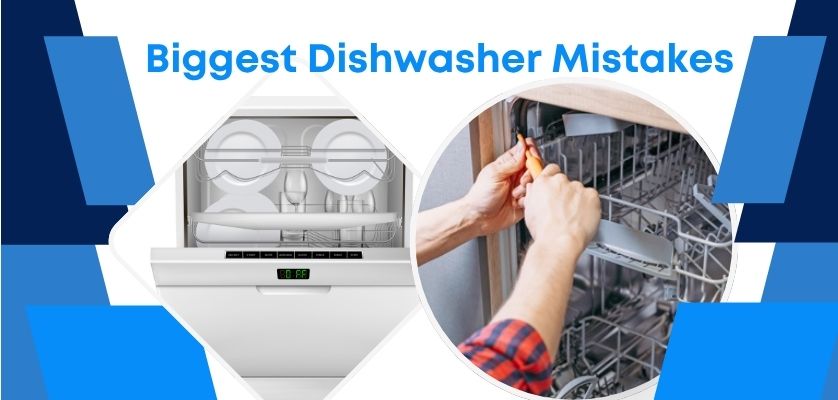
The Biggest Dishwasher Mistakes Homeowners Make

By Appliance Maintenance, Dishwasher, Dishwasher problems, Repairing

A dishwasher is really helpful, in any home. Many people do not know that they make mistakes with it. These mistakes make it use energy and might need costly fixes. Knowing about these errors helps make your appliance last longer and work well. It also helps you save money and avoid problems. The dishwasher is an appliance that you often use and should maintain to ensure it operates smoothly. 

1. Overloading the Dishwasher

When many dishes are loaded into the dishwasher simultaneously, this is one of the most frequent mistakes consumers make. Many people’s reasoning behind this mistake is that it saves time when washing the dishes. The truth is, when you cram too many dishes into a single load it does not work well. The water and detergent cannot get to every dish. Dishes do not come out clean when this happens. When the dishes are stacked in either of those two ways, your dishwasher will work harder than necessary and you will have an appliance that has worked overtime and will be full of dirty dishes. 

2. Skipping Regular Dishwasher Cleaning

People think that dishwashers are self cleaning.. The truth is that food bits and grease can get stuck inside. This stuff can also leave behind a residue from the soap. If you do not clean it all this stuff will build up. Clean the filter and spray arms of your dishwasher. Clean the door seals.By maintaining a clean, you’ll be not only maintaining your efficiency, but also improving the performance of your appliance and maintaining your home as well. One thing you should clean frequently is the filter, spray arms and door seal. These areas are where all the debris collects and can prevent from working properly.

3. Using Too Much Detergent in Dishwasher

More detergent does not mean dishes. Using much detergent can leave residue on your dishes. It can also cause buildup inside your machine. For results always follow what the manufacturer recommends.

4. Ignoring Small Problems

If you hear noises or notice that your machine is not cleaning properly do not ignore it. You should also pay attention to leaks or problems, with the water draining. These small issues can become problems if you do not fix them. It is an idea to call someone to fix your appliance as soon as you notice something is wrong. This can help you save money on.

5. Not Scraping Off Food

While modern dishwashers are really powerful big chunks of food can clog the filters and drains. To help them work better scrape off the food from plates before putting them in. This also helps make the appliance longer.

Protect Dishwasher & Your Investment

Using your dishwasher the way and taking care of it can make it last a lot longer. If it is not working like it is supposed to you should get a professional to fix it. They can find out what is wrong  and fix it before it becomes an expensive problem, with it.

How Regular Maintenance Reduces Refrigerator Repair Costs

How Regular Maintenance Reduces Refrigerator Repair Costs

By Appliance Maintenance, Refrigerator problems, Repairing
A refrigerator is always, on, day and night to keep our food fresh and safe. The refrigerator works all the time so we should check it regularly to keep the refrigerator in shape. Doing things to take care of the refrigerator makes the refrigerator work better uses less energy and saves us money on refrigerator repairs.

Why Maintenance Matters for Refrigerator Repair Costs

Dust and dirt can really hurt how well your refrigerator works over time. When parts get dirty or blocked your refrigerator has to work a lot to keep things cool. This can be bad for parts, like the compressor or the fan motor.
If you take care of your refrigerator it will keep running and you will not have to deal with it breaking down all of a sudden. Regular maintenance is good. It helps your refrigerator longer and it also saves you money on refrigerator repairs.

Cleaning Condenser Coils Reduces Refrigerator Repair Costs

Refrigerator condenser coils are really important. They help get rid of heat and keep your refrigerator running every single day. When dust builds up on these coils it makes your refrigerator not cool well and it uses a lot more energy.
If the coils are dirty the refrigerator has to work a lot and it gets too hot a lot more often.
You should clean the coils on your refrigerator every months so that the air can flow better.
Cleaning the coils on a basis will help you avoid having to pay for expensive repairs. It will make your refrigerator work a lot better.

Checking Door Seals Prevents Higher Refrigerator Repair Costs

The door seals on your refrigerator keep the air inside every single day. If the seals are cracked or loose warm air gets in easily. This makes the refrigerator work a lot harder to keep things cool. You should check the door seals, on your refrigerator all the time to see if they are damaged or worn out. If you find any problems you should replace the seals away. This will help your refrigerator work better. You will not have to pay for expensive repairs to the cooling system.

Fixing Small Problems Early Saves Money

Small problems with your refrigerator can turn into issues if you do not pay attention to them. If you hear noises or find water leaks or if your refrigerator is not cooling evenly it probably means something is going wrong inside the refrigerator.
Refrigerator technicians can find these problems. Fix them before they become serious. Fixing these problems on usually costs a lot less, than buying new major parts for your refrigerator.

Final Thoughts

Regular maintenance is really important, for homeowners because it helps them save money on refrigerator repairs and makes their appliance work better. If you clean the condenser coils and check the door seals you can find problems before they become big issues. Fixing these problems early is an idea because it prevents expensive breakdowns and keeps your refrigerator running well for a long time. Regular maintenance helps homeowners reduce refrigerator repair costs and it also improves refrigerator performance.
Emergency Appliance Repair

Emergency Appliance Repair: Common Problems & Same-Day Solutions Every Homeowner Should Know

By Appliance Maintenance, Repairing

What Is Emergency Appliance Repair?

Emergency appliance repair is about fixing problems with appliances really fast usually on the same day they happen. This is for things that need to be fixed away. For instance if your refrigerator is not working your food can go bad in a few hours.. If your dryer is broken you will have a lot of wet clothes to deal with. Emergency appliance repair is important because it helps people deal with these kinds of problems quickly which makes a difference, in daily life. Emergency appliance repair is very helpful when you need something fixed fast.

Common Problems That Need Immediate Attention

Some appliance problems need to be fixed because they can cause bigger problems. For example a refrigerator that is not cooling can ruin the food you have in it. A washer that will not drain can cause a lot of water to spill out. That can damage things.
A dryer that does not get hot can make it hard to do your laundry on time. A dishwasher that is leaking can hurt your kitchen.
When you see these appliance problems you should try to fix them away.

Signs You Should Call for Same-Day Repair

Most appliances give us warning signs before they break down completely. You might hear noises or smell something burning. Sometimes you will notice water leaking from the appliance. The appliance may just not work as well as it used to. If you see any of these signs doing something, about it away can help you avoid spending a lot of money on repairs later.

Simple Checks Before Calling a Technician

Before you call for help you should check a basic things. The appliance needs to be plugged in. You have to inspect the circuit breaker. You also have to clean any filters or vents on the appliance. These small steps can solve the problem with the appliance.. If the issue, with the appliance continues it is best to call a professional to fix the appliance.

Final Thoughts

Appliance breakdowns never happen when it is a time. If you act fast it can make things a lot easier for you. If you have an emergency appliance repair service you can fix appliance problems quickly and keep your home running smoothly. This way your appliance will be. You will not have to worry about appliance breakdowns causing problems, in your home.

FAQs

Q1: What counts as an appliance emergency?

Any issue that creates safety risks, stops daily use, or causes leaks and damage is considered an emergency.

Q2: Can appliances always be repaired the same day?

In most cases, technicians can fix the problem quickly, although some repairs may require additional parts.

Q3: Is emergency repair more expensive?

It can cost slightly more, but it often prevents larger and more costly issues.

Q4: Should I repair or replace my appliance?

If the repair cost is reasonable and the appliance is not too old, repairing it is usually the better option.
Repair Refrigerators

Try These DIY Hacks to Repair Refrigerators at Ease

By Repairing

When your refrigerator malfunctions, life goes messy. Undoubtedly it’s the most used appliance in your household. Proper maintenance is essential to keep your freezer in optimal condition. However, it is not always possible to predict occasional refrigerator malfunctions. Thus, how can you repair refrigerators efficiently and affordably when it does not function properly?

Pocket-Friendly Tips for Repair Refrigerators

Before hiring a professional service, you can opt for a few DIY methods to repair your refrigerator and save money. Here are some repair tips you can follow to address common problems fast:

Check Condenser Coils for Cooling Related Problems

Check if the light turns on when you open the door. If not, make sure that the fridge is properly plugged in. Also, examine the breaker panel to ensure an uninterrupted power supply.

Sometimes, the fridge runs but with an inadequate cooling effect. What to do in such a situation? The first thing to do is to check the temperature control dial. Make sure that it is in the right position. If food containers block the vents and freezer compartments, your fridge may not get cold enough.

Another way to repair the refrigerator for inadequate chill is to remove dust from the condenser coil. It improves the airflow through the coil to let the fridge cool properly. You can use a long brush to eliminate the dust. Check the fan for dust. If it is dusty, you should vacuum it to ensure smooth operation.

Examine the Inlet Tube and Saddle to Fix Ice Maker Issues

Unfasten the icemaker and unplug the wiring harness to access the water inlet tube. Low water pressure may make the tube plugged. If the drizzling water freezes, you may find a plugged one. The next step is to melt the ice in the inlet tube.

A saddle valve is the one that connects the ice maker to the home water supply. The needle hole of this valve may clog to cause blockage. Rotate the saddle valve in the clockwise direction and tighten it to eliminate mineral deposits. Turn the valve to its original position after completing the unclogging task.

Inspect the Fan Motor to Prevent Unwanted Noises

What makes a fridge noisy? Most probably, the source of the problem could be the condenser fan motor. The evaporator fan motor may also contribute to making a fridge noisy. Check whether the sound is coming from the compressor or fan.

The back cover needs to be unscrewed before checking the exact source of the sound. The noise from the fan motor can be eliminated by replacing it with a new one. If the noise comes from the compressor, you may consider buying a new fridge.

Takeaway on Repair Refrigerators

These 3 DIY tips will help you solve common problems efficiently and save money. Never undermine the importance of timely refrigerator maintenance. Many people ignore minor issues and keep them unattended for a long time. The consequence will be expensive repair work. Do not let it happen to your refrigerator.

If you don’t have the tools and experience to repair refrigerators, you can hire a professional home appliance repair service. Experienced professionals perform all tasks with meticulous precision. They have the tools and expertise to solve any complicated repair task responsibly and efficiently.

refrigerator problems

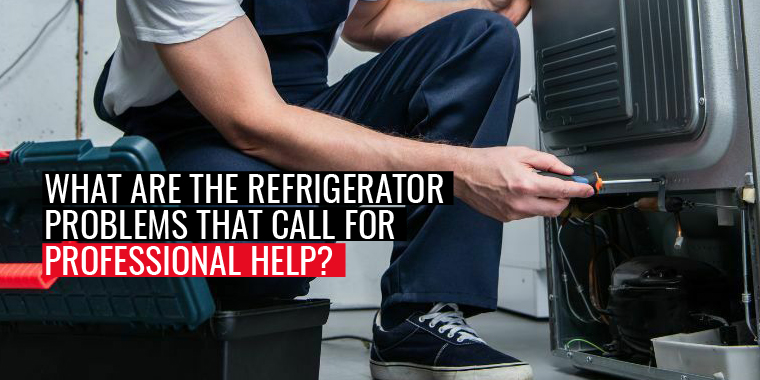
What Are The Refrigerator Problems That Call For Professional Help?

By Repairing

Life might be difficult to picture if you have refrigerator problems. You depend on your refrigerator daily to keep perishable items fresh and secure from harm. Regrettably, one of your home’s most important items sometimes gets overlooked.

Your refrigerator requires maintenance from time to time, just like any other item in your house. Regrettably, many individuals fail to notice the symptoms that a refrigerator needs serious repair. Ignoring these warning signs to avoid having to replace your refrigerator much sooner.-

  • Quick Food Spoiling:

You can observe milk and meats, two meals that are particularly susceptible to rotting, going bad earlier than you anticipated. Although some meals fail to cool down, canned beverages may take significantly longer to cold.

Any one of your refrigerator problems might be the cause. For instance, faulty door seals might let heated air inside your refrigerator, which can affect its functionality. Also, a sluggish refrigerant leak might reduce the cooling power of your refrigerator. Get a professional to take a closer look if your refrigerator is having trouble maintaining its cold.

  • Ice-build:

To avoid the formation of frost and ice, the majority of contemporary refrigerators contain an automated defrosting mechanism. Nevertheless, this function is only sometimes reliable, and ice building may be so severe that it defeats the refrigerator’s built-in safety measures. The refrigerator could require some time to defrost properly, so unplug it for a bit.

You should get an ice accumulation issue checked out as soon as possible by a service expert.

  • Loud noise:

Your refrigerator is designed to operate enough to be ignored even if it isn’t completely silent. Another sign that anything is amiss with your refrigerator is excessive noise. Before further issues arise, inspect the refrigerator to see if you can hear it buzzing or humming from the opposite side of the kitchen.

  • Too Much Condensation:

On a hot day, if your refrigerator perspires as much as you do, you could be dealing with condensation. A vapor trapped in heated air condenses into a liquid when it becomes cold. Condensation is a normal by-product of refrigeration that keeps your food fresh.

Overload drip trays that overflow and leak water may also cause leaks. Many hazardous risks, including electrocution, can result from even a tiny water spill. You should have a service specialist examine these problems as soon as possible.

  • Become heated:

A refrigerator repair is necessary if passing by your refrigerator feels as warm as passing by your baseboard heater.

Feel the refrigerator’s back. Anytime the temperature rises over lukewarm, the motor works too hard and becomes too hot. To get the motor fixed as possible in this situation, you can arrange a service. If you need more money, you can find yourself paying a higher monthly power bill.

  • Bill goes up:

Refrigerator problems can cause your electricity bill to appear slightly higher than usual. It could be necessary to replace your refrigerator if you’ve tried to enhance its functionality without success.

Avoid wasting money by allowing your food to expire and your electricity costs to soar. It is essential to act now that you are more aware of the warning signs that your refrigerator may need maintenance.

washing machine not draining

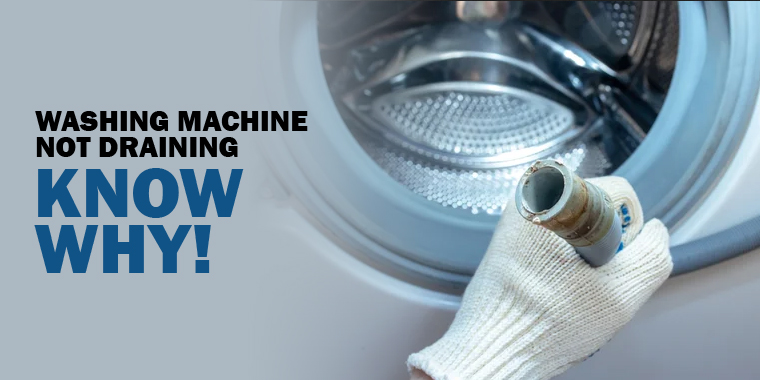
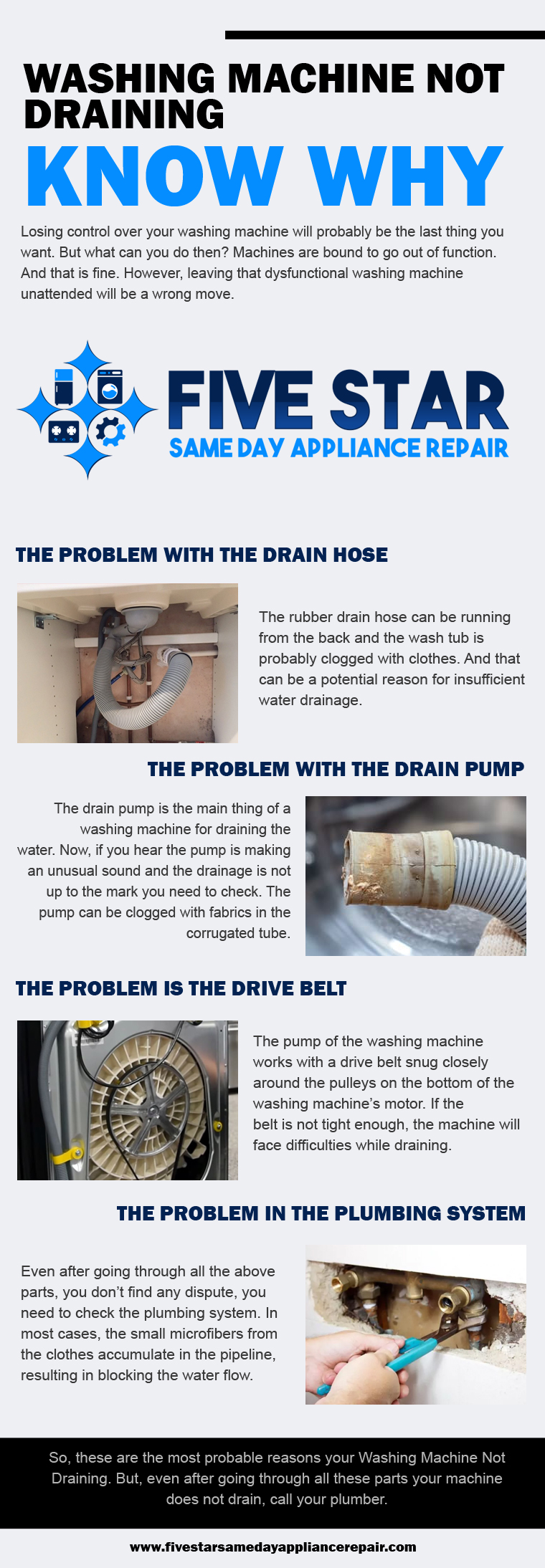
Washing Machine Not Draining- Know Why!

By Repairing

Losing control over your washing machine will probably be the last thing you want. But what can you do then? Machines are bound to go out of function. And that is fine. However, leaving that dysfunctional washing machine unattended will be a wrong move. So, what are you going to do with a washing machine that is not working correctly?

We will take you there. Here we will talk about some of the most frequent reasons for Washing Machine Not Draining. However, it will always be wise to seek help from a professional appliance repair expert. And even if you are able to solve the problem temporarily, try to consult with a professional home appliance repair expert later.

Now, let’s dive into the probable reasons for a Washing Machine Not Draining.

5 Reasons Why Your Washing Machine Is Not Draining

You cannot solve all the problems at home. Therefore, if you are not confident enough, better to visit your trusted appliance repair service provider. However, you must know what the reasons are. So, you can discuss the problem with your servicing team.

washing machine not draining

1.       The problem with the drain hose

The rubber drain hose can be running from the back and the wash tub is probably clogged with clothes. And that can be a potential reason for insufficient water drainage. To check this matter in detail, remove the drain hose and blow air through it. If there is no obstacle, then the problem is probably in the washing machine pump.

2.       The problem with the drain pump

The drain pump is the main thing of a washing machine for draining the water. Now, if you hear the pump is making an unusual sound and the drainage is not up to the mark you need to check. The pump can be clogged with fabrics in the corrugated tube.

Now, most pumps come with removable covers with a filter inside the pump. If the clog is here, you can easily clean up the pump and fix the problem.

In some top-loading washing machines, the pump is located in the back of the machine, on front loaders, and just below the door. Clean the lint and assemble it as it was.

Even after checking the clogged parts, if you are not getting the desired result, then the pump is broken. And you need to replace the pump.

3.       The problem is the drive belt

The pump of the washing machine works with a drive belt snug closely around the pulleys on the bottom of the washing machine’s motor. If the belt is not tight enough, the machine will face difficulties while draining. To fix this problem, you need to turn the machine upside down and examine it. So, if you don’t have any helping hand, it is better to leave the work in the expert’s hand.

4.       The problem with the lid switch

There is a small plastic switch just under the lid of the washing machine. It senses whether the door is closed or not. Until the lid is closed properly, the washing machine won’t start working. And in case the washing machine starts working, it won’t be without any issues. And that is where you can face a drainage issue. 

So, check if the washing machine lid is closed properly or not. If you find the machine is not locked, press the lid switch with your hand and wait until you hear a click sound. In case you still can’t hear that it is time to replace the washing machine’s lid switch.

5.       The problem in the plumbing system

Even after going through all the above parts, you don’t find any dispute, you need to check the plumbing system. In most cases, the small microfibers from the clothes accumulate in the pipeline, resulting in blocking the water flow. As a result, the entire washing machine hits an abrupt halt.

The drain hose of the washing machine goes a few inches within the pipe. So, there is a high chance of depositing dirt and lint in that part. Make sure, if the problem is there or not.

So, these are the most probable reasons your Washing Machine Not Draining. But, even after going through all these parts your machine does not drain, call your plumber. 

How to Fix a Squeaky Dryer

How to Fix a Squeaky Dryer: Expert Guide

By Repairing, Washing Machine Repair

Introduction to How to Fix a Squeaky Dryer

If your dryer makes a lot of noise, doing the laundry might be annoying. Your dryer may squeak due to several problems, including a malfunctioning dryer belt, unlubricated roller wheels, and erosive bearings. You will need to buy replacement parts, get a tool kit, spend time watching dryer repair tutorials on YouTube, or read your dryer manual before you can fix your squeaky dryer.

You must disconnect your squeaky dryer before you start mending it to avoid mishaps and also make sure you have a spacious and spotless work area. Any parts which, accidentally fall to the floor will be visible in a clean space.

A squeaky dryer is a sign that you need to address any issues with the equipment as promptly as possible. If you are a novice, you can contact a professional to assist you in diagnosing the issue with your dryer. It would be beneficial if you were aware that there are several potential causes for the squeaky sounds made by a running dryer.

Until you open the dryer, you might not be able to determine which one you have. The best part is that dryers don’t have a lot of moving parts that could malfunction; as a result, you can simply identify the noisy component.

A few reasons are discussed here for squeaky dryers, along with potential fixes for each.

A defective dryer belt

The dryer drum is encircled by a long, slender rubber belt called the dryer belt. Typically, the pulley is connected to the motor before the belt is fastened to it. The idler pulley will rotate whenever the motor is running, which will turn the drum and the belt.

Depending on how frequently you use the dryer, your belt may suffer from severe wear. Regular spinning could stretch your dryer belt, which would decrease efficiency. The belt will not be able to spin a metal drum if it is not properly fastened to it. It’s not a wise idea to combine metal with loose rubbers. The squeaky dryer sound can be the result of friction between the two components.

You can instantly determine if the squeaky noise is coming from your belt when you open the dryer. Replace the belt if the rubber is found to be loose. Be aware, that you can’t replace anything until you unplug the wire harness plug and remove the mounting screws. You’ll find instructions for doing this in your manual.

It shouldn’t be challenging to replace the old belt once you remove any parts that can obstruct your access to it. The new belt just needs to be looped around the two pulleys in the same manner as the old, pooled belt.

Bearings for Drum Glides

You can have faulty gliding bearings if the noises you hear from the squeaky dryer don’t come from a broken wheel or a piece of loose rubber but rather sound like metal or plastic. A drum’s edges are covered with microscopic nylon, or plastic glides. They are frequently affixed using several locking tabs.

You will need to remove the complete dryer drum if you find that your glide bearings are malfunctioning. As soon as you’ve done that, you can use pliers to aid you in pressing the tab pairs back into their openings and separating the beatings.

Idler Pulley

The idler pulley and the motor pulley are most likely the two pulleys in your dryer. Between the dryer belt and the motor is where you’ll find the idler pulley. It could lose stability or begin to wiggle, producing a squeaking sound since it is a spinning wheel.

By manually spinning the idler pulley, you can determine whether it is the cause of the squeaking sounds. You can take the pulley off of its bracket and swap it out for a new one once you’ve ascertained that the pulley is what’s causing the squeak. You must put the belt and the other components back in their place once you’re done.

After reading the dryer’s instruction manual, you may replace an idler pulley without much difficulty. The difficult aspect may be finding one that is functional with your dryer since you should not settle for any substitute which gets your way.

Damaged, noisy motor

It could be preferable to purchase a new motor if your current one is noisy. However, purchasing a new motor would be quite expensive, in addition to paying for the electrician’s services. The best possible solution might be to replace your squeaky dryer with a new one if its motor is noisy.

However, you should buy a new motor if you are determined to fix the problem. Finding a motor that is a perfect match for your dryer will be the most difficult part. Once you have one, you might need to remove the rear panel of your dryer by unscrewing the screws at the dryer’s back. Work until you’ve removed everything that’s impeding access to the motor.

After accessing, detach it so that you may start the replacement procedure.

Get the motor replaced, then assemble each component in reverse order. It may be better to seek professional assistance if you’re replacing a motor because it might be somewhat complicated.
It would be wise to get a new motor if you discover that yours is beyond fixing.

Fan or blower wheel

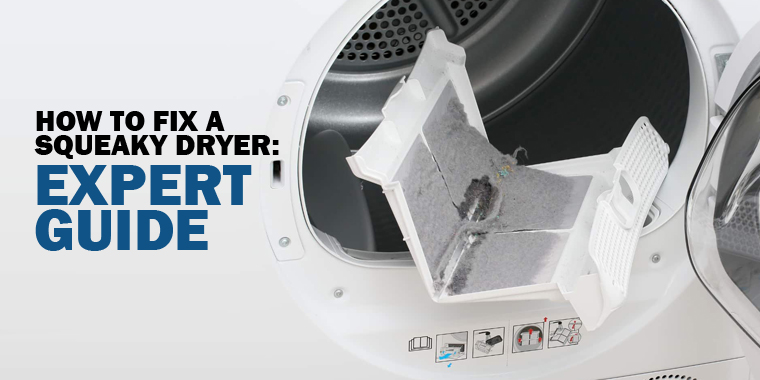
When heated, the blower fan, which is a wheel made of metal, nylon, or plastic, sucks air into the dryer. The hot air is forced through the drum and out of the vent by the fan. Over time, the blower fan may accumulate lint or debris. That could cause damage to the fan, thus making a squealing noise.

You should check your blower wheel from the dryer’s back if you think it’s the source of the squeaky sounds. For the fan to suck air in, most dryers feature a vented access panel at the bottom of the dryer back. If necessary, remove it, clean it, check the fan’s rotation, and ascertain whether it’s creating any undesirable noises.

Conclusion

Now you know, How to Fix a Squeaky Dryer by yourself. The dryer is a necessary item in the majority of households, and with proper care, it might last for many years. You should be concerned if you have a squeaky dryer since it could be a sign of something more serious.

The fact that there aren’t many moving parts in a dryer makes it easier to pinpoint the source of the squeals. As soon as you determine the causes, fix, or replace the problematic parts. Because failing to do so may necessitate replacing the dryer entirely.

But it is always recommended that you must call your nearest experts who know How to Fix a Squeaky Dryer efficiently.